English
 Français
 Español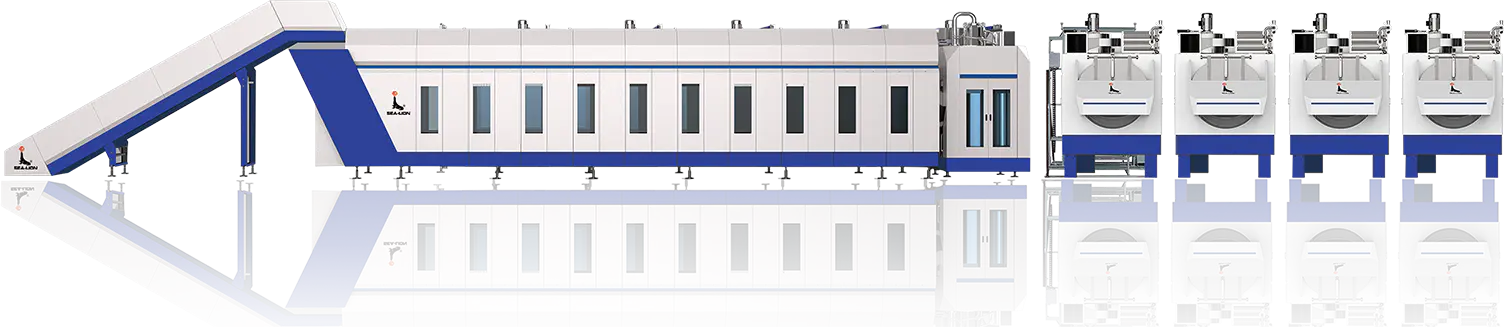









Why Hydraulic Extraction Presses Are Essential for High-Capacity Linen Plants
Content
- 1 What Is a Hydraulic Extraction Press?
- 2 The Role of the Press in a Continuous Tunnel Washing System
- 3 Key Benefits for High-Capacity Linen Processing Plants
- 4 Energy Optimization and Cost Reduction
- 5 Integration with the Complete Linen Processing Line
- 6 Frequently Asked Questions
- 6.0.1 Q1: What is the main difference between a hydraulic extraction press and a centrifugal extractor?
- 6.0.2 Q2: What moisture retention can be expected from a hydraulic extraction press?
- 6.0.3 Q3: Is a hydraulic extraction press suitable for delicate fabrics?
- 6.0.4 Q4: How does a hydraulic extraction press lower the total cost of linen processing?
High-capacity linen processing plants operate under relentless pressure to move massive volumes of sheets, towels, table linen, and uniforms through the washroom every day, all while controlling water, energy, and labor costs. Each machine in the washroom line contributes to the overall result, but no stage has a greater effect on downstream energy consumption than dewatering. That is why the hydraulic extraction press has become an essential component in high-capacity linen processing plants equipped with continuous batch washing systems.
By replacing high-speed spinning with controlled high-pressure compression, the hydraulic extraction press achieves lower moisture retention, enables true inline continuous production, and dramatically reduces the thermal load placed on dryers. Understanding how this technology works and why it matters at scale is essential for anyone planning or modernizing a large-scale laundry operation.
What Is a Hydraulic Extraction Press?
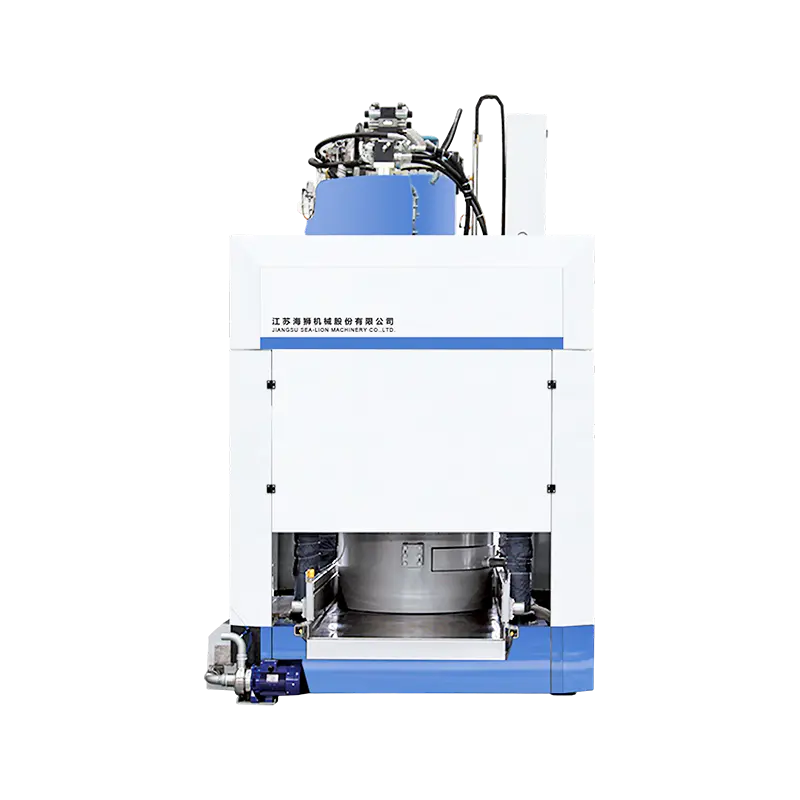
A hydraulic extraction press is a dewatering machine engineered to squeeze water out of washed textiles using hydraulic force. Washed linen enters the pressing chamber, a hydraulic cylinder drives a press plate downward, and the fabric is compressed into a dense cake. The water forced out of the fabric flows away through drainage channels, leaving the linen with a significantly lower moisture content than conventional spinning can achieve.
How It Works
The pressing force of industrial models typically ranges from 300 to 800 tons, depending on the machine size and the fabric being processed. The entire cycle is fully automated and synchronized with the upstream tunnel washer and downstream dryers. As each batch is pressed, a sensor triggers the next cycle, ensuring that the flow of linen never stops.
A hydraulic extraction press can lower linen moisture retention to 45 to 55 percent, versus 60 to 70 percent for conventional centrifugal extractors.
The Role of the Press in a Continuous Tunnel Washing System
In a high-capacity plant, the hydraulic extraction press occupies the critical position between the tunnel washer and the drying stage. The workflow is straightforward: soiled linen enters through an automatic laundry loading system with weighing device, is washed inside the main tunnel washer, and then exits at the discharge end, where the extraction press receives it batch by batch.
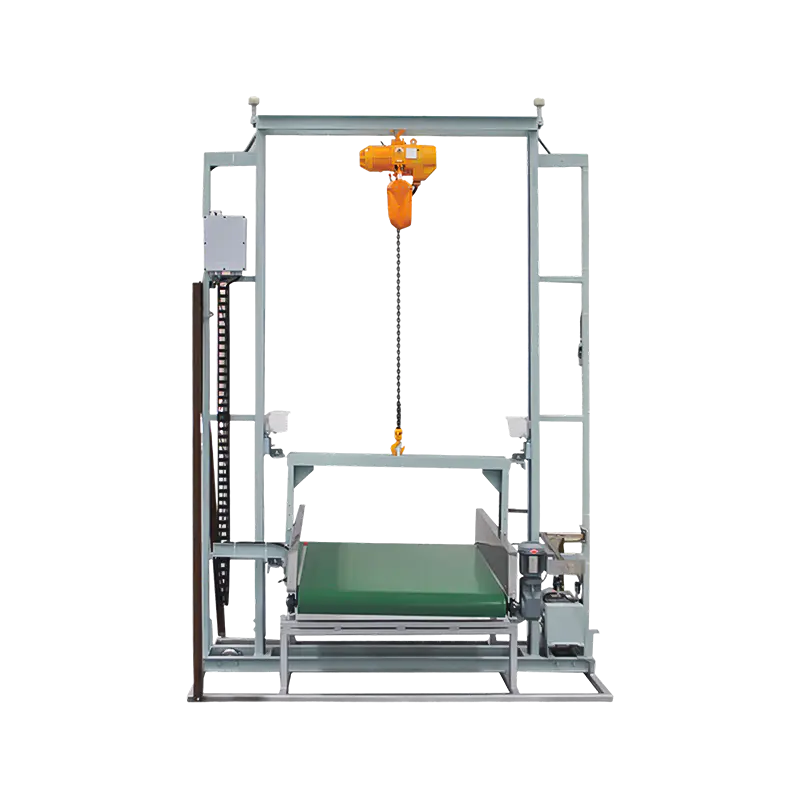 Hydraulic Laundry Extraction Press for Continuous Batch ProcessingThis hydraulic extraction press sits between the tunnel washer and dryers, compressing washed linens into uniform cakes to enable uninterrupted flow and efficient dehydration in high-capacity plants.View Product →
At the press, each batch is compressed into a compact cake, then ejected onto a shuttle or conveyor for transport to the dryers and finishing equipment. Because the press works inline, the tunnel washer never has to pause. The result is genuine continuous processing, which is the architectural principle behind the tunnel-type continuous batch washer system and the reason why hydraulic extraction is essential in high-capacity operations.
To understand the washing stage that feeds the press, you can read about how a fully automatic continuous tunnel washer improves production flow in a modern laundry plant.
Key Benefits for High-Capacity Linen Processing Plants
The hydraulic extraction press delivers a set of advantages that directly address the most expensive and limiting aspects of industrial linen processing.
- Lower moisture retention for faster drying. A hydraulic press reduces moisture retention to roughly 45 to 55 percent, which is significantly better than the 60 to 70 percent typical of centrifugal extractors. Less water in the fabric means less time and heat required in the dryers.
- Substantial energy savings. Drying is the most energy-intensive step in the laundry cycle. Because the press removes water mechanically, it reduces the thermal energy needed downstream and lowers fuel or electricity consumption.
- Continuous operation for higher throughput. Unlike batch-style extractors that require separate loading, spinning, and unloading phases, the hydraulic press operates inline and keeps the production line moving without interruption.
- Gentle on fabrics. Compression is a slow, uniform action, creating less mechanical stress on textile fibers than high-speed spinning. This extends the service life of sheets, towels, and uniforms and reduces lint generation.
- Compact footprint. A hydraulic extraction press has a smaller footprint and simpler foundation requirements than a large centrifugal extractor, making it easier to integrate into existing plant layouts.
- Less manual handling. The press is fully automatic and integrated with upstream and downstream conveyors, which reduces labor requirements and operator fatigue.
Hydraulic Press vs. Centrifugal Extractor
| Parameter | Hydraulic Extraction Press | Centrifugal Extractor |
|---|---|---|
| Dewatering principle | High-pressure compression | High-speed rotation |
| Typical moisture retention | 45 to 55 percent | 60 to 70 percent |
| Operation mode | Continuous, inline | Batch, cyclic |
| Cycle duration | Synchronized with tunnel washer | 10 to 20 minutes per batch |
| Fabric stress | Low | Moderate to high |
| Energy consumption in drying | Lower, less residual moisture | Higher, more residual moisture |
| Foundation requirements | Compact, simple floor support | Large, vibration-isolated base |
| Automation level | Fully inline automatic | Semi-automatic or manual |
Energy Optimization and Cost Reduction
The most compelling economic argument for installing a hydraulic extraction press is its contribution to energy optimization in a continuous batch washer system. As the comparison above shows, the press removes more water mechanically than alternative technologies. Since every drop of residual moisture must be evaporated by the dryers, the press effectively reduces the thermal workload placed on the entire drying stage.
For example, reducing moisture retention from 65 percent to 50 percent can lower the heat required for drying by approximately 20 to 30 percent, depending on fabric type and dryer configuration. In plants that rely on steam boilers or natural gas-fired dryers, this reduction produces a direct and measurable impact on fuel bills. Meanwhile, the mechanical energy consumed by the press is minimal compared with the thermal energy saved downstream.
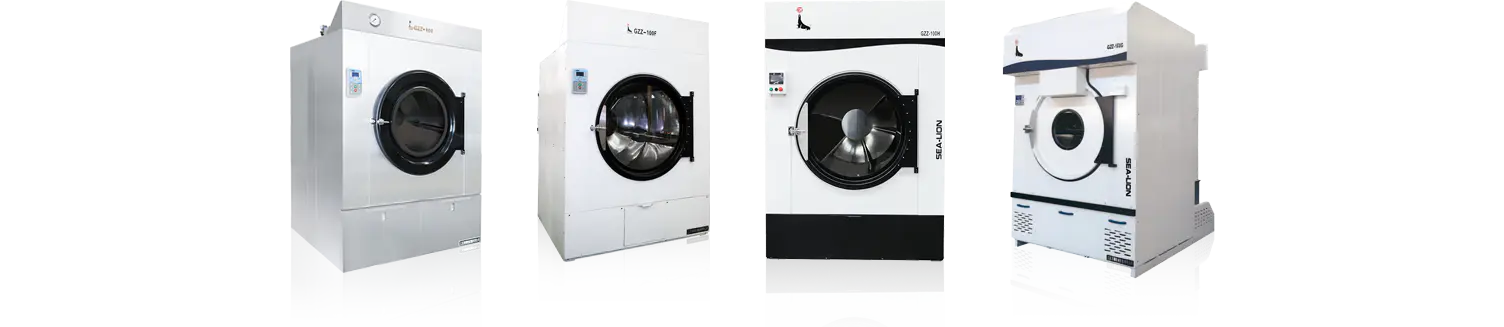
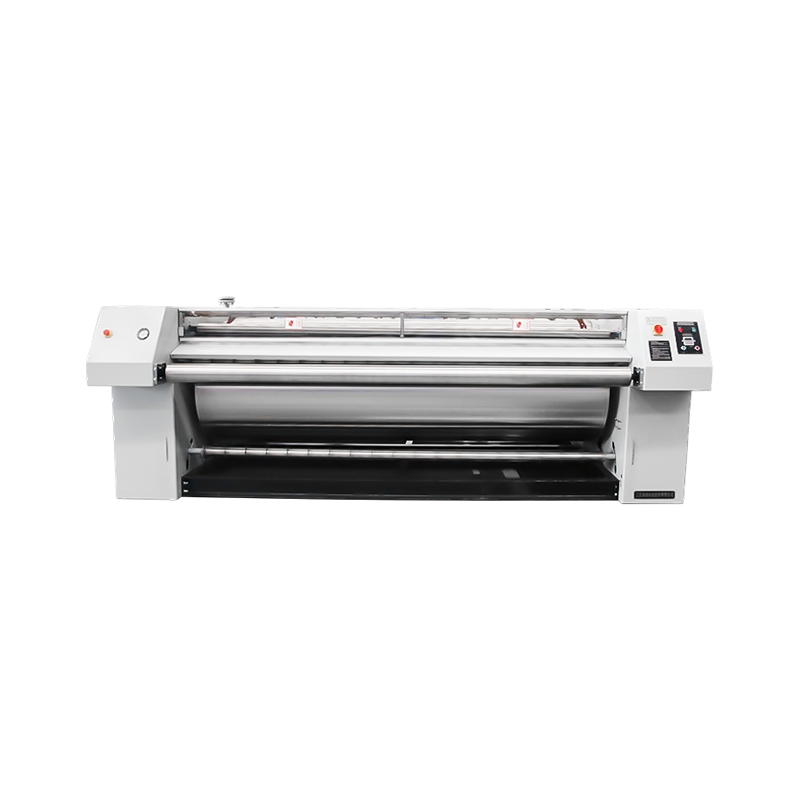
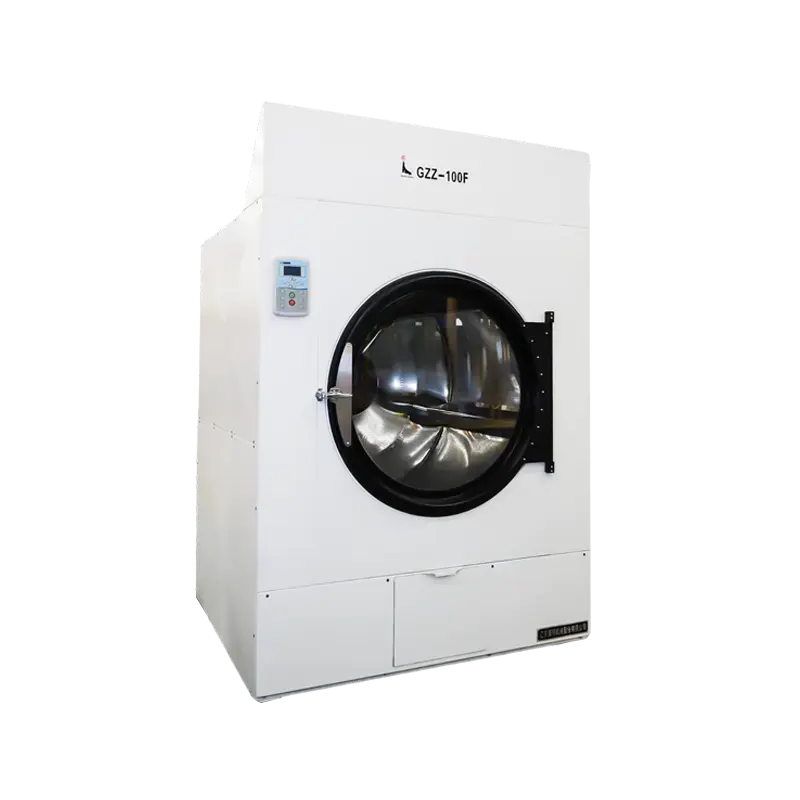 Automatic Pass-Through Tumble Dryer for Stable Drying LoadsThis pass-through tumble dryer processes uniformly compressed linen cakes from the extraction press, providing consistent drying conditions that reduce energy consumption and protect fabric quality.View Product →
Because the press produces uniformly compressed cakes, the downstream dryers receive a consistent input and can operate at stable, predictable loads. This stability allows operators to tune the drying process more precisely, avoid over-drying, and protect fabric quality. For a more detailed discussion of the underlying principles, see how energy optimization works in a continuous batch washer.
Integration with the Complete Linen Processing Line
Choosing the right hydraulic extraction press is only one part of a successful laundry system. A high-capacity processing plant requires every component, including the tunnel washer, automatic loading systems, shuttle conveyors, press, and pass-through dryers, to work together as a single integrated line. The press capacity must match the output rate of the tunnel washer; otherwise, the line will either starve the dryers or create a backlog of wet linen.
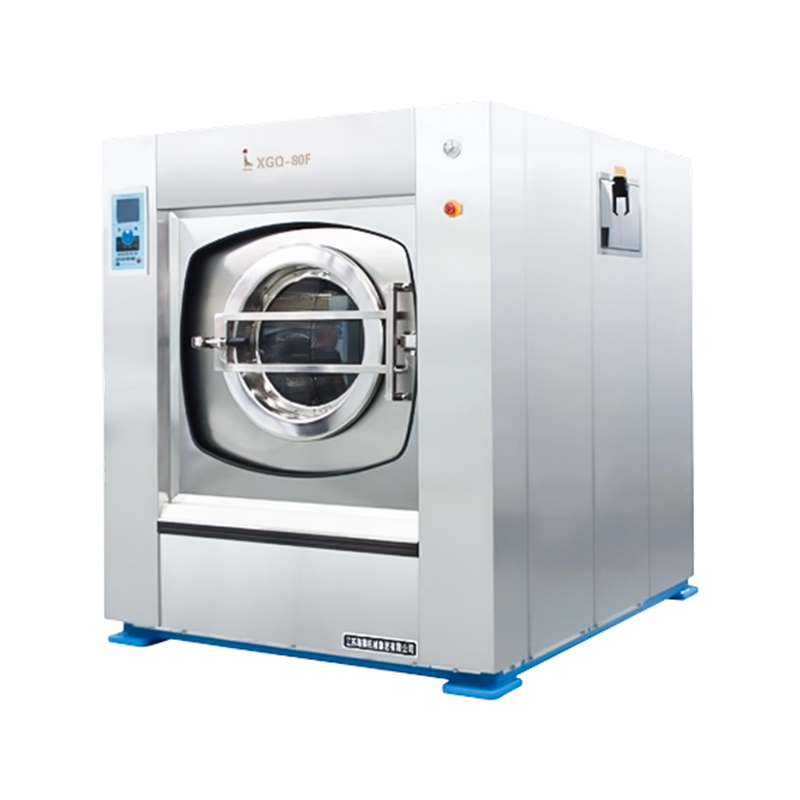 Continuous Tunnel Washer System for Integrated Laundry LinesThis continuous tunnel washer system is designed to work seamlessly with hydraulic extraction presses, offering automated control and consistent wash quality for high-capacity textile processing.View Product →
Jiangsu Sea-Lion Machinery designs the hydraulic extraction press as an integral member of the tunnel-type continuous batch washer system product family, ensuring that control systems, cycle times, and mechanical interfaces are fully compatible. This approach shortens commissioning time and prevents operational mismatches that can occur when assembling machines from different vendors.
When the press is properly integrated, the benefits multiply. Water recovery systems can route press water back into the wash process, heat recovery units can capture energy from dryer exhaust, and the entire plant can run with minimal operator intervention. This is why plant managers increasingly specify hydraulic extraction as part of a fully engineered linen processing line rather than purchasing isolated machines.
Frequently Asked Questions
Q1: What is the main difference between a hydraulic extraction press and a centrifugal extractor?
The fundamental difference lies in the dewatering method. A centrifugal extractor spins linen at high speed, using centrifugal force to fling water out of the fabric. A hydraulic extraction press uses mechanical pressure from a hydraulic cylinder to squeeze water out. The press achieves lower moisture retention, applies less stress to textile fibers, and is designed for continuous inline operation.
Q2: What moisture retention can be expected from a hydraulic extraction press?
Depending on fabric composition and the pressing force applied, a hydraulic press typically reduces moisture retention to 45 to 55 percent. Heavy kitchen textiles might retain slightly more moisture, while lighter fabrics such as sheets can achieve results at the lower end of the range.
Q3: Is a hydraulic extraction press suitable for delicate fabrics?
Yes. The pressing parameters can be adjusted to accommodate different textile types. Delicate fabrics can be processed with lower pressing pressures and longer compression times, preserving fiber structure while still achieving better moisture removal than spinning.
Q4: How does a hydraulic extraction press lower the total cost of linen processing?
The press lowers costs through multiple channels: reduced moisture retention cuts drying fuel consumption, continuous inline operation reduces labor requirements, gentler fabric handling extends linen service life, and the compact design reduces installation and foundation costs. Together, these savings improve the operating margin of any high-capacity plant.
High-capacity linen processing plants face an unforgiving set of performance demands: high throughput, low energy consumption, consistent quality, and controlled labor costs. The hydraulic extraction press addresses all of these simultaneously, making it an indispensable component in modern continuous batch washing systems. By squeezing more water out of every batch before it reaches the dryer, the press reduces energy bills, accelerates production, and protects the fabrics that the plant's business depends on.
For plant engineers and laundry operators planning capacity upgrades, the question is no longer whether to install a hydraulic extraction press, but how to integrate it most effectively into the complete washing line. The answer starts with selecting a reputable manufacturer and building a system in which every stage, from weighing and washing to pressing and drying, works in seamless harmony.

- No. 2 Lehong Road, Leyu Town, Zhangjiagang, Suzhou City, Jiangsu Province, China
- +86-512-58602532
- [email protected]
Copyright @ Jiangsu Sea-Lion Machinery Co., Ltd. All rights reserved
Custom Laundry Equipment Suppliers