English
 Français
 Español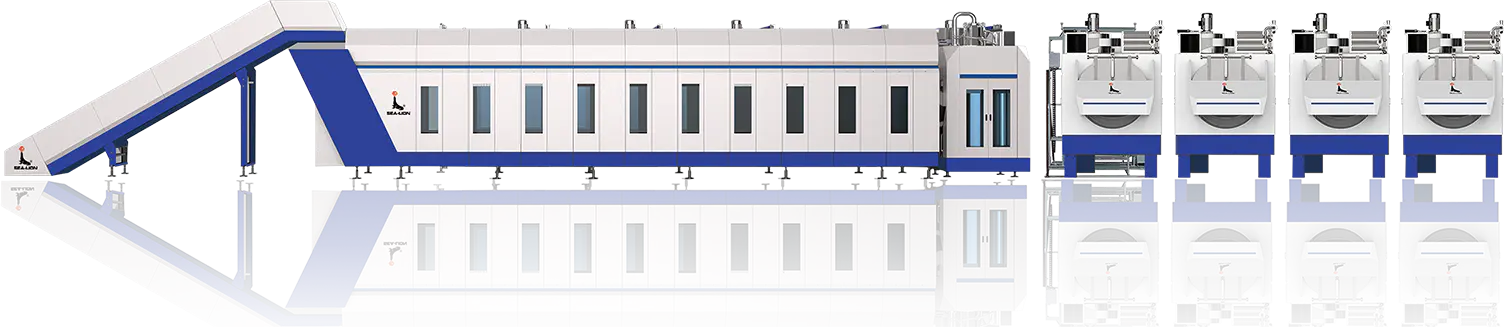










Continuous Batch Washer vs. Washer Extractor: When to Upgrade to a Tunnel System
Content
- 1 What Is a Washer Extractor?
- 2 What Is a Continuous Batch Washer (CBW)?
- 3 CBW vs. Washer Extractor: Key Differences at a Glance
- 4 When to Upgrade to a Tunnel System
- 5 Cost, Energy, and ROI Considerations
- 6 Planning Your Transition from Washer Extractor to Tunnel
- 7 Frequently Asked Questions
- 7.0.1 Q1: At what volume should a laundry switch from washer extractors to a CBW?
- 7.0.2 Q2: Can a continuous batch washer handle different fabric types?
- 7.0.3 Q3: How much water does a continuous batch washer save compared with a washer extractor?
- 7.0.4 Q4: Is it possible to use a tunnel system together with existing washer extractors?
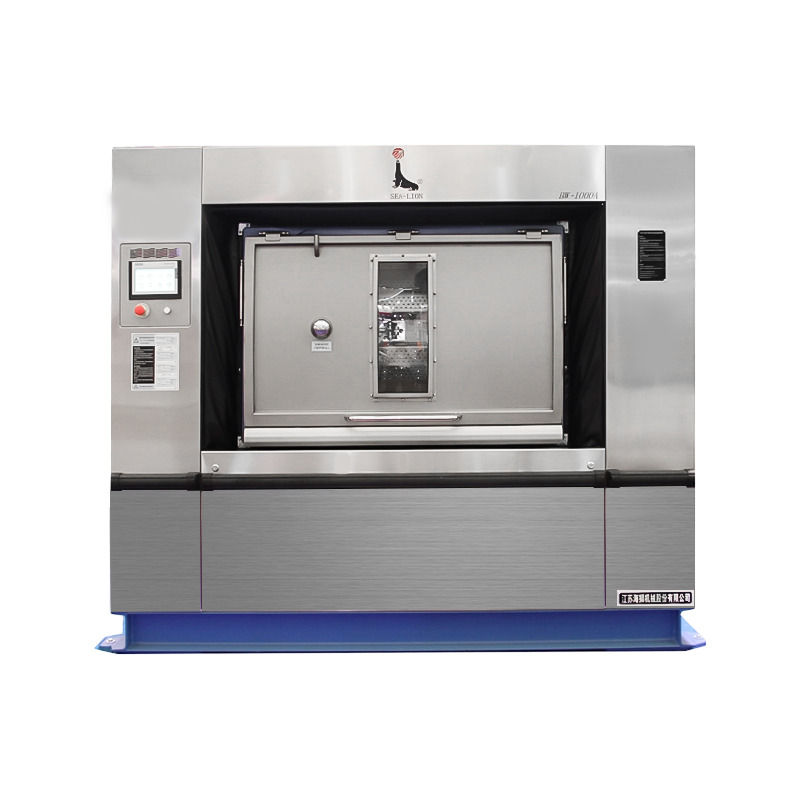
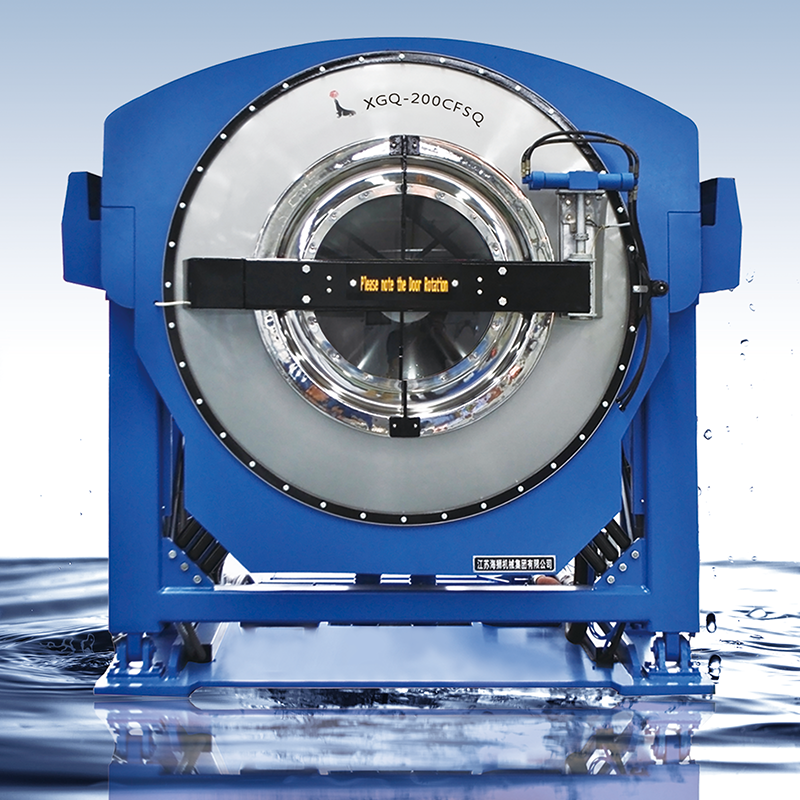
This guide compares the two technologies directly and lays out a clear framework for deciding when it is time to upgrade to a continuous batch washer. You will learn how each system works, where they differ in capacity, labor, and resource use, and which operational signals point toward a tunnel washing system.
What Is a Washer Extractor?
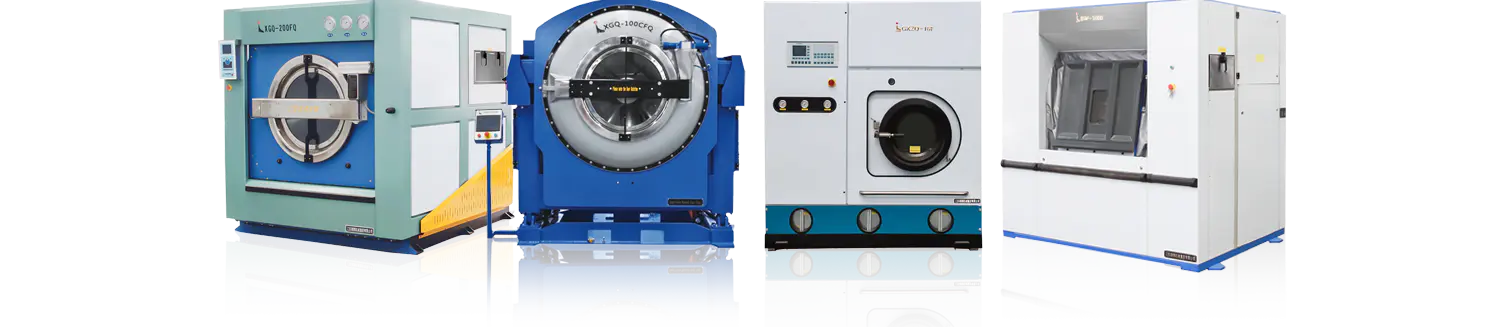
A washer extractor is a single-drum machine that performs both washing and high-speed water extraction in one unit. The operator loads the drum, selects a wash program, and the machine moves through fill, wash, rinse, and spin stages before the load is removed for drying or finishing. These machines have been the traditional workhorse of commercial and industrial laundries, with capacities ranging from roughly 20 kg to 120 kg or more per load.
Because each drum runs as an independent batch, washer extractors offer simplicity, proven reliability, and a moderate entry cost. They are easy to schedule, flexible for mixed loads, and straightforward to operate. Their simplicity also makes them ideal for laundries that process many different fabric types in small quantities.
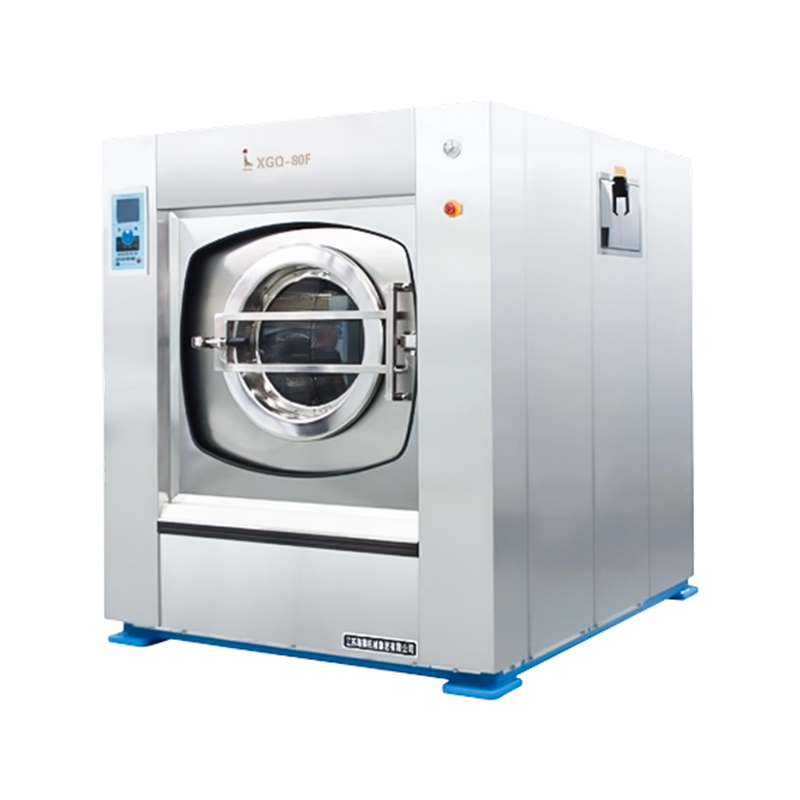
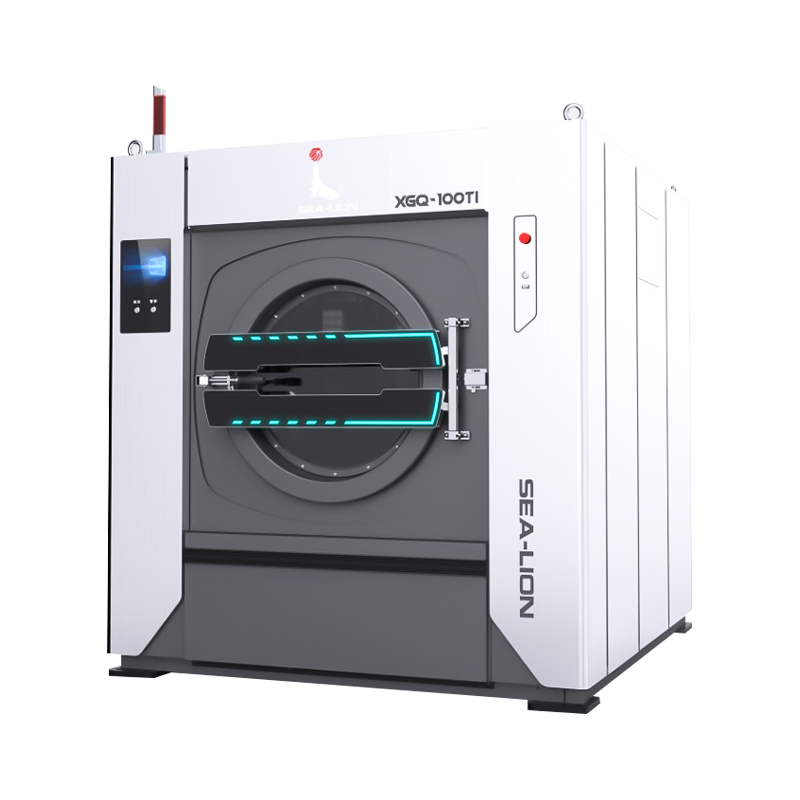 Full Suspension Auto Washer Extractor for Stable High-Volume WashingThis washer extractor uses a hydraulic full-suspension system to reduce vibration without a special foundation. Its touchscreen control and large drum opening simplify loading and improve workflow, making it a practical choice for laundries with mixed fabric loads.View Product →
Where a Washer Extractor Fits Best
- Daily volumes below roughly 2,000 kg of dry linen.
- A wide mix of fabrics and frequent small-batch changeovers.
- Limited floor space or a layout that cannot accommodate a long inline system.
- Teams that rely on simple operator control and low maintenance complexity.
What Is a Continuous Batch Washer (CBW)?
A continuous batch washer, often called a tunnel washer, is a modular system in which linen moves continuously through a series of connected compartments. The main tunnel washer is divided into multiple chambers, and each chamber performs a specific stage of the wash process. Through counterflow design, fresh water enters at the clean end and travels opposite to the linen flow, dramatically reducing water and chemical consumption.
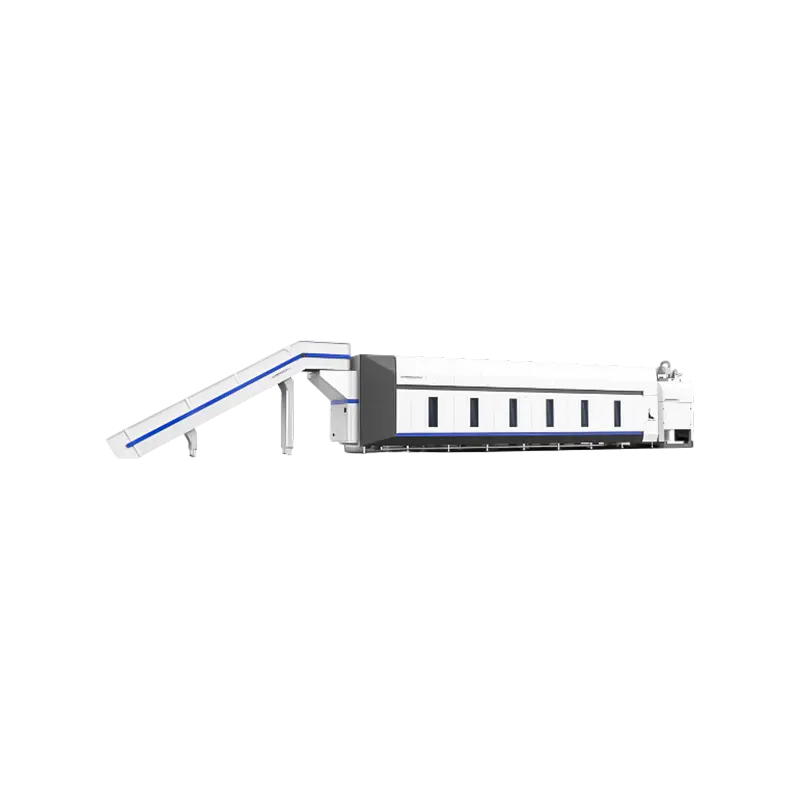
 Continuous Tunnel Washer System for Large-Scale Linen ProcessingDesigned for continuous operation, this tunnel washer handles high throughput with counterflow water savings. Its bottom conveyor prevents blockages, and automated controls adjust temperature, chemicals, and time to suit different fabric types in demanding laundry settings.View Product →
In a fully automated tunnel system, the process starts at the soiled side with an automatic weighing and loading device. The linen advances through the wash chambers, passes through a hydraulic extraction press that removes moisture, and exits through a pass-through tumble dryer at the clean side. This continuous flow replaces the load-by-load cycle of conventional machines and enables a single line to process several tonnes of linen per day.
Operators choose a CBW for two main reasons: throughput and consistency. Because the tunnel runs as one steady procession rather than a series of discrete batches, output is predictable, quality is repeatable, and labor is concentrated on supervision rather than loading and unloading. To see the productivity gains in practice, review how a fully automatic continuous tunnel washer improves your laundry throughput.
CBW vs. Washer Extractor: Key Differences at a Glance
The decision is easier when the two technologies are compared side by side. The table below summarizes the most important operational differences between a conventional washer extractor and a continuous batch washer tunnel system.
| Parameter | Washer Extractor | Continuous Batch Washer |
|---|---|---|
| Processing mode | Batch, load by load | Continuous multi-chamber counterflow |
| Throughput | One load per cycle | Steady output, several tonnes per day |
| Labor requirement | One or more operators per machine | Fewer operators for the same output |
| Water and energy use | Moderate to high per kilogram | Substantially lower through counterflow reuse |
| Flexibility | Excellent for mixed small batches | Best for standardized high-volume linen |
| Footprint | Several machines use extra space | Compact for equivalent capacity |
| Upfront cost | Lower per machine | Higher, with lower cost per kilogram at scale |
These figures are illustrative; actual performance depends on configuration, linen mix, soil levels, and the control strategies applied. The central trade-off is clear, however: washer extractors deliver flexibility at moderate cost, while a tunnel system pays off when volume, consistency, and resource efficiency become the dominant priorities.
When to Upgrade to a Tunnel System
There is no single magic number, but many operators begin evaluating a tunnel system when daily dry-linen volume reaches roughly 2,000 kg and continues to climb. At that level, a bank of washer extractors means constant reloading, growing overtime, and increasing scheduling pressure. The following planning benchmarks can help with a first assessment:
Beyond volume, several operational signals suggest that an upgrade deserves serious consideration:
- Laundry staff spend most of the shift loading and unloading individual machines.
- Overtime is regular even when all machines run continuously.
- Wash quality varies between operators and between shifts.
- Water, steam, and chemical costs rise faster than production output.
- Floor space is tight, and adding more washer extractors is not practical.
When these patterns appear together, a continuous batch washer changes the economics. The tunnel processes linen in a steady stream, so throughput rises without adding operators, while the counterflow system continuously reuses water and heat. The result is a lower cost per kilogram of clean linen, not just a faster machine.
Cost, Energy, and ROI Considerations
The initial investment in a tunnel washing system is significantly higher than the cost of a single washer extractor. Depending on the number of chambers and the level of automation, a complete line can represent several times the price of one conventional machine. That up-front cost, however, must be weighed against predictable, recurring operating savings.
Water is one of the largest controllable costs in an industrial laundry. The counterflow design of a CBW allows water to be reused across washing stages, and the extraction press removes additional moisture before drying, which cuts steam consumption downstream. Operators who tune these systems properly report large reductions in detergent, water, and energy use when compared with conventional washers.
A realistic payback analysis should include direct savings from water, energy, chemicals, and labor, plus indirect gains such as fewer rejected items, more predictable throughput, and reduced overtime. Many commercial laundries find that the total cost per kilogram of washed linen drops noticeably within the first few years of operating a tunnel system, especially when automatic loading and extraction presses are included in the line.
Planning Your Transition from Washer Extractor to Tunnel
Moving from washer extractors to a continuous batch washer system is a project, not a purchase. Start by mapping your current production: daily volume by linen type, peak hours, soil levels, and the flow of goods from receiving to finishing. This baseline determines the number of wash chambers, the extraction method, and the drying capacity you actually need.
Next, design the material flow. A typical small tunnel line begins with an automatic weighing and loading system on the soiled side, feeds the main tunnel washer, passes through a hydraulic extraction press, and ends at the drying and finishing stage. Because these modules operate as one continuous line, the physical layout deserves as much attention as the machine specifications.
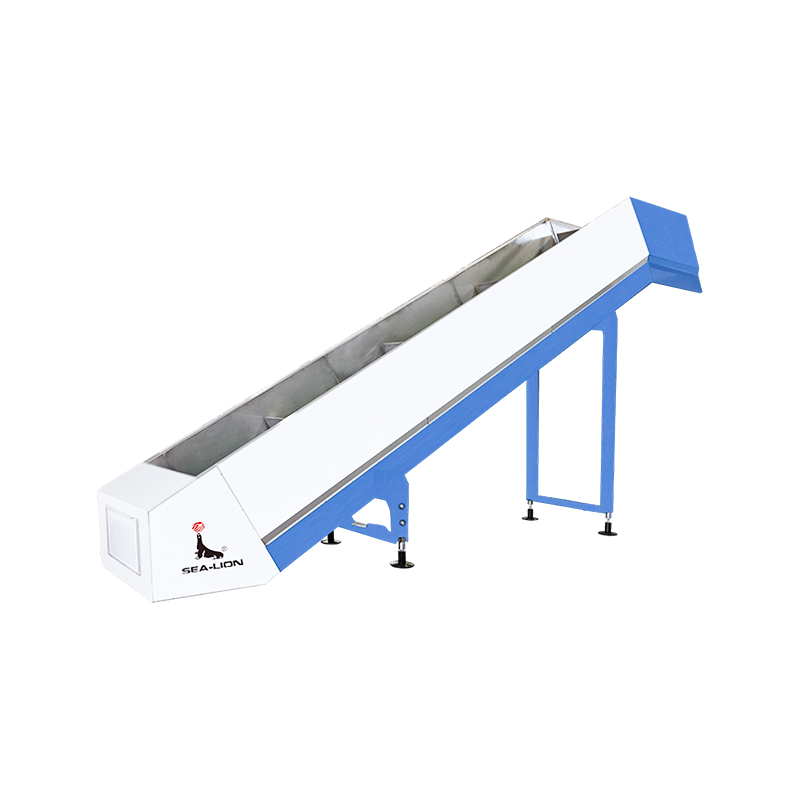 Automatic Laundry Loading System with Weighing DeviceThis loading system automates weighing and feeding to ensure accurate batch control in large laundries. By minimizing manual handling, it reduces errors and supports a smooth transition to continuous tunnel operations, complementing the equipment described around it.View Product →
You should also plan for a transition period. Many laundries install the tunnel alongside existing washer extractors so that production continues while operators learn the new workflow. Gradual commissioning, structured operator training, and a defined maintenance plan reduce operational risk. A complete tunnel-type continuous batch washer system can be configured with the loading, pressing, conveying, and drying modules required to match your specific site and growth plan.
Frequently Asked Questions
Q1: At what volume should a laundry switch from washer extractors to a CBW?
Many operators start evaluating a tunnel system when daily dry-linen volume reaches approximately 2,000 kg, especially if volume is expected to keep growing. Below that level, a well-managed bank of washer extractors may still be more cost-effective. Above it, the continuous throughput and labor savings of a CBW usually become decisive.
Q2: Can a continuous batch washer handle different fabric types?
Yes. Modern tunnel washers allow loads to be managed by program and fabric classification, and the wash process can be tuned for heavily soiled industrial linen or more delicate healthcare textiles. The practical requirement is that total throughput is high enough to keep the tunnel running in planned, consistent batches.
Q3: How much water does a continuous batch washer save compared with a washer extractor?
The counterflow design can reduce water consumption by roughly 50 to 70 percent compared with conventional batch washing under typical commercial laundry conditions. The exact saving depends on load profile, water quality, extraction efficiency, and the control settings used.
Q4: Is it possible to use a tunnel system together with existing washer extractors?
Yes. Many laundries keep their washer extractors for smaller or specialty loads and use the tunnel for consistent high-volume linen. This hybrid approach is often the best way to transition without stopping production or taking on unnecessary risk.
The choice between a continuous batch washer and washer extractors is ultimately a question of scale and strategy. Washer extractors remain reliable, flexible, and low-risk for smaller operations and mixed workloads. When daily volume, labor costs, and resource efficiency push the economics in the other direction, a continuous batch washer, supported by automatic loading, extraction, and drying modules, becomes one of the most powerful upgrades a laundry can make.
Start with your own production data, calculate the cost per kilogram under both models, and let the numbers determine the right timing. If the analysis points toward a tunnel system, look for a manufacturer that can supply the entire integrated line, from weighing and loading to the clean side delivery.

- No. 2 Lehong Road, Leyu Town, Zhangjiagang, Suzhou City, Jiangsu Province, China
- +86-512-58602532
- [email protected]
Copyright @ Jiangsu Sea-Lion Machinery Co., Ltd. All rights reserved
Custom Laundry Equipment Suppliers