English
 Français
 Español











Barrier vs Standard Washer Extractors: Why Healthcare Laundry Needs Isolation
Content
- 1 What Is a Barrier Washer Extractor?
- 2 What Is a Standard Washer Extractor?
- 3 Barrier vs. Standard Washer Extractors: Key Differences at a Glance
- 4 Why Healthcare Laundries Require Physical Isolation
- 5 Choosing the Right Barrier Washer for Your Healthcare Laundry
- 6 Frequently Asked Questions
- 6.0.1 Q1: Can a standard washer extractor be used in a hospital laundry?
- 6.0.2 Q2: What is the difference between a pass-through washer and a barrier washer?
- 6.0.3 Q3: Does a barrier washer extractor disinfect better than a standard washer?
- 6.0.4 Q4: How many barrier washer extractors does a hospital laundry need?
- 6.0.5 Q5: Are barrier washer extractors more expensive to operate?
- 7 Conclusion
Hospital-acquired infections (HAIs) remain one of the most persistent challenges in modern medicine, and contaminated textiles are a frequently underestimated transmission route. Healthcare laundry departments must therefore go beyond ordinary cleaning: they must prove that soiled linen never comes into contact with processed, disinfected fabric. This is exactly where the debate over barrier washer extractors vs. standard washer extractors begins. While both machine types can achieve high wash quality, only one design delivers the physical isolation that healthcare laundries require to break the chain of cross-contamination.
In this article, we compare these two configurations in depth, explain why physical separation is non-negotiable in medical settings, and provide practical guidance for selecting the right system for your laundry operation.
What Is a Barrier Washer Extractor?
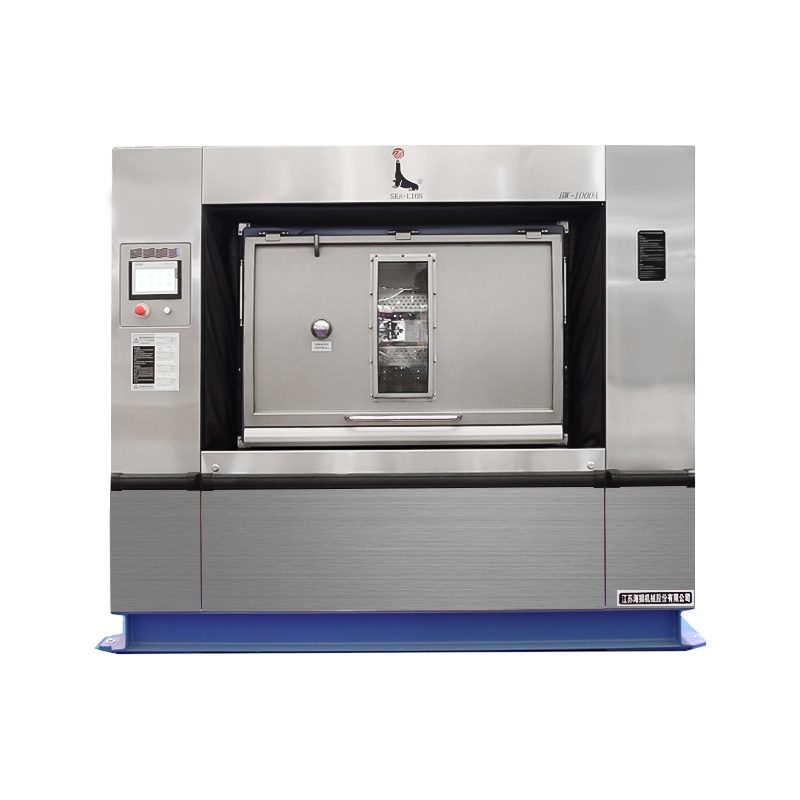
A barrier washer extractor, also known as a pass-through or double-door washer, is built around one central principle: the physical separation of the dirty and clean sides of the laundry process. The machine is mounted through a partition wall, with one door opening into the soiled-linen receiving area and a second door opening into the clean processing area. This two-door, pass-through design prevents cross-contamination by ensuring that the same opening is never used for both loading and unloading.
The operational sequence is straightforward:
- Soiled linen is loaded through the dirty-side door.
- The wash cycle runs with the doors interlocked so they cannot be opened simultaneously.
- After the cycle finishes, clean linen is unloaded through the clean-side door.
- The dirty side and clean side remain physically isolated by the wall at all times.
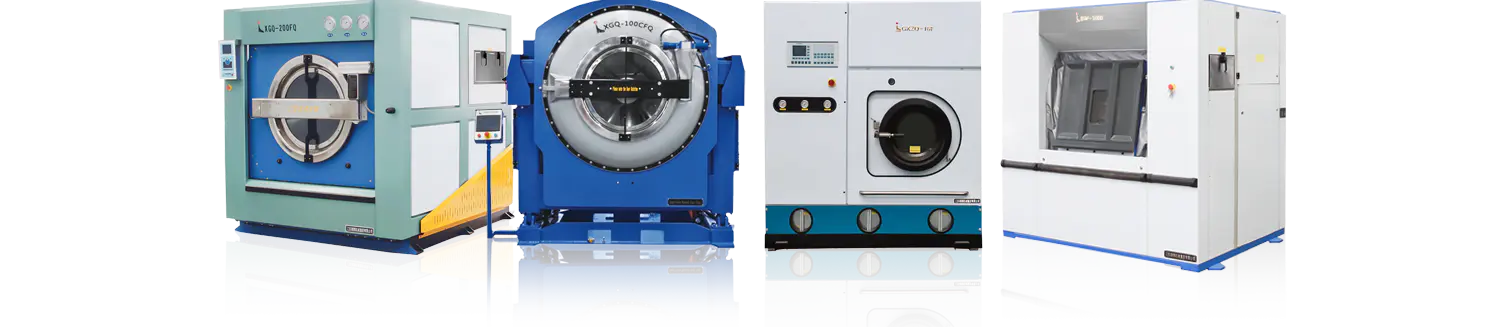
This configuration directly supports the hygienic zoning requirements of healthcare laundries, where staff movement, air pressure, and material flow are deliberately separated. Sea-Lion's cross-contamination prevention barrier washer extractor exemplifies this architecture with a rugged welded frame and an interlocking door system engineered for demanding clinical environments.
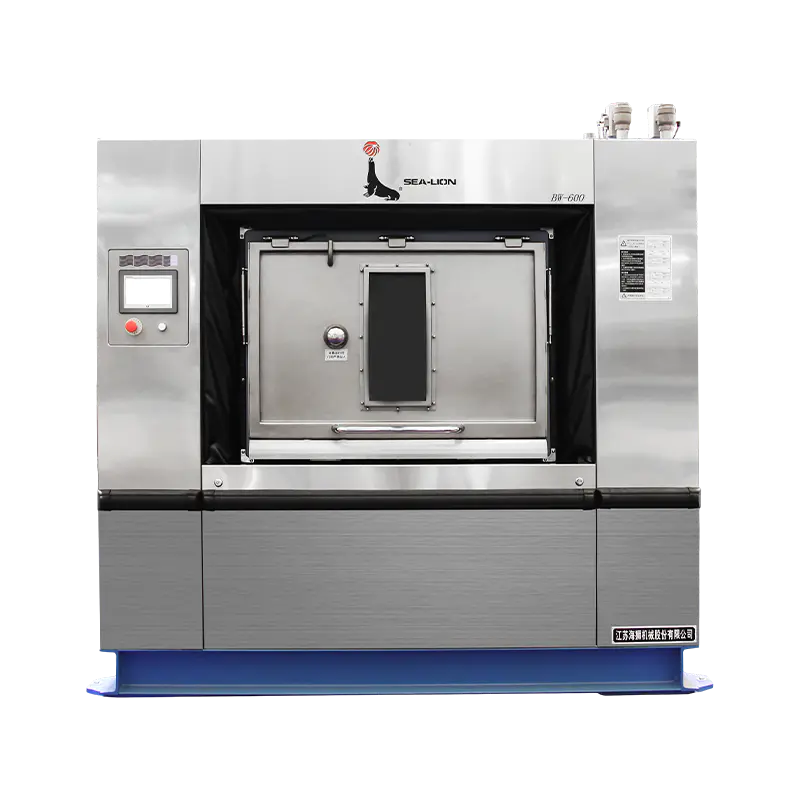 Cross-Contamination Prevention Barrier Washer Extractor for Clinical UseThis rugged barrier washer extractor separates loading and unloading zones with interlocking doors, built for demanding clinical environments where hygiene zoning and cross-contamination prevention are critical.View Product →
What Is a Standard Washer Extractor?
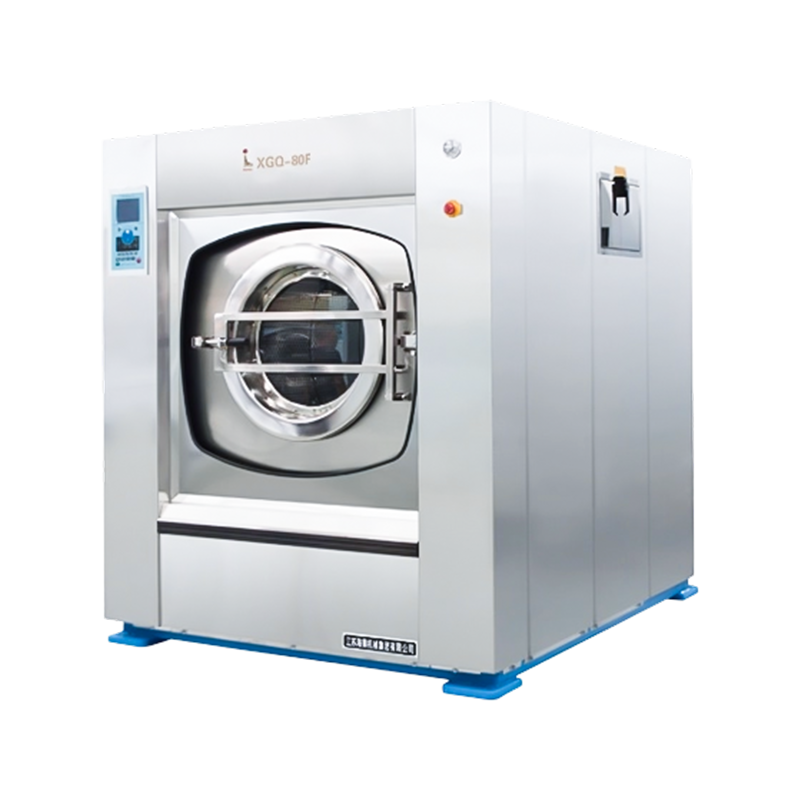
A standard washer extractor is the workhorse of commercial laundries. It features a single loading and unloading door, a sturdy drum, and a programmable control system that handles washing, rinsing, and high-speed extraction in one machine. In a conventional laundry layout, operators load soiled garments and unload clean items from the same side, relying on workflow discipline rather than physical barriers to keep dirty and clean textiles apart.
Standard washer extractors are perfectly adequate for hotels, restaurants, fitness centers, and many industrial applications where the risk of microbial cross-contamination is comparatively low. The critical limitation is that a standard machine provides no structural isolation: the same door, the same floor area, and often the same staff handle both soiled and freshly washed textiles. In healthcare, where pathogens such as Clostridium difficile, MRSA, and norovirus can survive on fabric, that single-door compromise represents a serious infection control liability.
Understanding these baseline strengths and limitations is an important first step before comparing any alternative configuration. The key question is not whether a standard washer can clean, but whether it can keep clean items clean after the cycle ends.
Barrier vs. Standard Washer Extractors: Key Differences at a Glance
The differences between a barrier washer extractor and a standard washer extractor go far beyond door count. They influence your laundry floor layout, workflow, infection control compliance, and even staffing requirements.
| Comparison Point | Barrier Washer Extractor | Standard Washer Extractor |
|---|---|---|
| Door configuration | Two doors, pass-through design | Single door |
| Physical isolation | Full separation between dirty and clean zones | None; both flows share the same access point |
| Recommended settings | Hospitals, clinics, medical laundry services | Hotels, restaurants, gyms, light industrial |
| Infection control | Designed for hygienic zoning compliance | Relies entirely on operator discipline |
| Capital investment | Higher, due to wall installation and interlock systems | Lower upfront cost |
| Workflow fit | Optimized for one-way dirty-to-clean flow | Suitable for general mixed laundry |
A barrier washer extractor is not simply a premium version of a standard model. It is a fundamentally different approach to laundry hygiene, engineered for facilities where the consequences of cross-contamination are measured in patient outcomes rather than linen quality alone.
Why Healthcare Laundries Require Physical Isolation
Healthcare laundry is unique because soiling is never merely cosmetic. Bed linens, surgical gowns, patient towels, and staff uniforms can carry blood, bodily fluids, and multidrug-resistant organisms. If these textiles are loaded and unloaded through the same opening, airborne particulates and surface contact can transfer pathogens from soiled items back onto freshly processed items, undoing the disinfection achieved by the wash cycle itself.
Professional guidelines and national standards for healthcare linen processing consistently emphasize three principles:
- Separation of flows: clean and soiled textiles must follow physically separate paths.
- One-way movement: linen should move from the dirty receiving area toward the clean dispatch area without backtracking.
- Controlled access: staff, carts, and equipment from the dirty side must never cross into the clean side.
A barrier washer extractor is the only common machine configuration that satisfies all three principles at the equipment level. Because the drum is sealed within a wall opening, the machine itself becomes the boundary between the dirty and clean sides. Interlocked doors guarantee that a load can be accessed from only one side at any given time, eliminating the human error factor that undermines manual segregation procedures. For a technical walkthrough of these safeguards, see our guide on how barrier washer extractors prevent cross-contamination in hospitals.
For hospitals that process linen in-house, and for commercial laundries serving multiple healthcare facilities, this physical isolation is not optional; it is the foundation of the entire quality assurance program. Sea-Lion's hospital hygienic barrier washer extractor goes a step further with a dedicated hygienic design that meets the rigorous demands of clinical laundry environments.
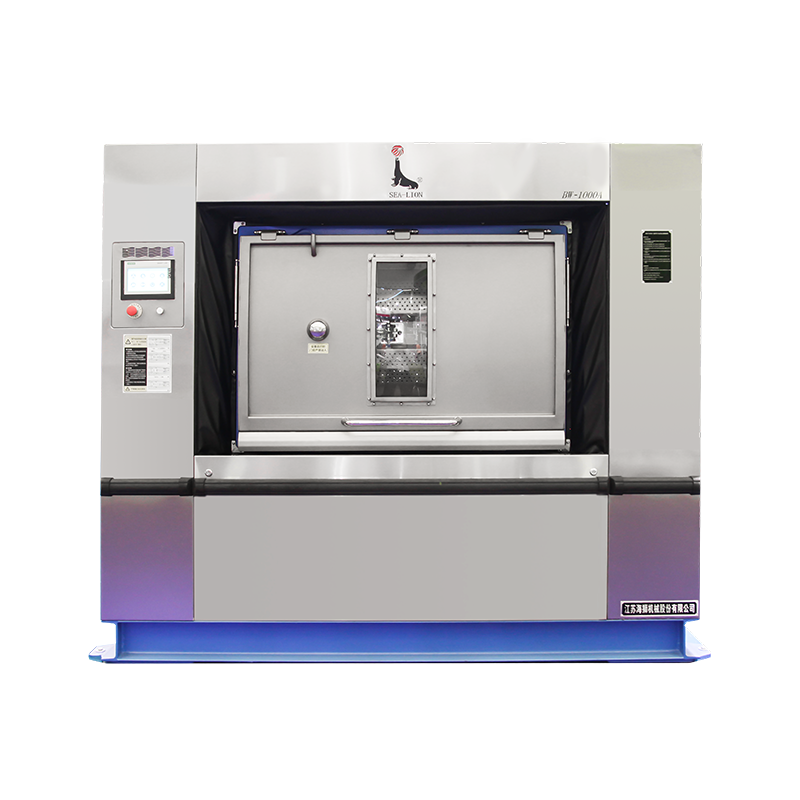 Hospital Hygienic Barrier Washer Extractor with Advanced ControlsDesigned specifically for hospitals and cleanrooms, this barrier washer uses physical isolation, stainless steel drums, touchscreen control, and remote monitoring to ensure hygienic laundry processing.View Product →
Choosing the Right Barrier Washer for Your Healthcare Laundry
When evaluating barrier washer extractors, healthcare laundry managers should assess several factors beyond the basic two-door concept:
- Capacity: match the rated load weight to your daily linen volume and peak demand.
- Hygienic construction: look for welded frames, smooth interior surfaces, and corrosion-resistant stainless steel that can withstand thermal disinfection cycles.
- Interlocking and control systems: program the controller to enforce door interlocks, verify cycle completion, and log batch data for traceability.
- Integration with the building layout: confirm that machine dimensions and the wall-mounting kit align with your partition structure and utilities.
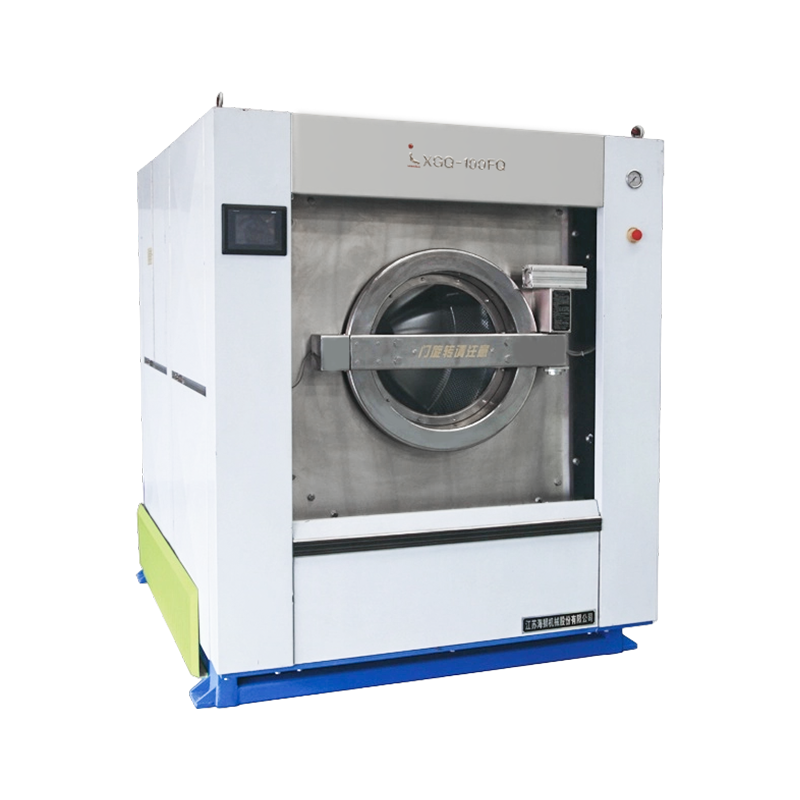
Facilities that process highly infectious linen, or that lack space for a full pass-through wall, may also consider a two-zone automatic washer extractor, which builds hygienic zoning into a single equipment footprint. This option adds flexibility for laundries that need documented separation between soiled and clean stages without a complete barrier wall retrofit.
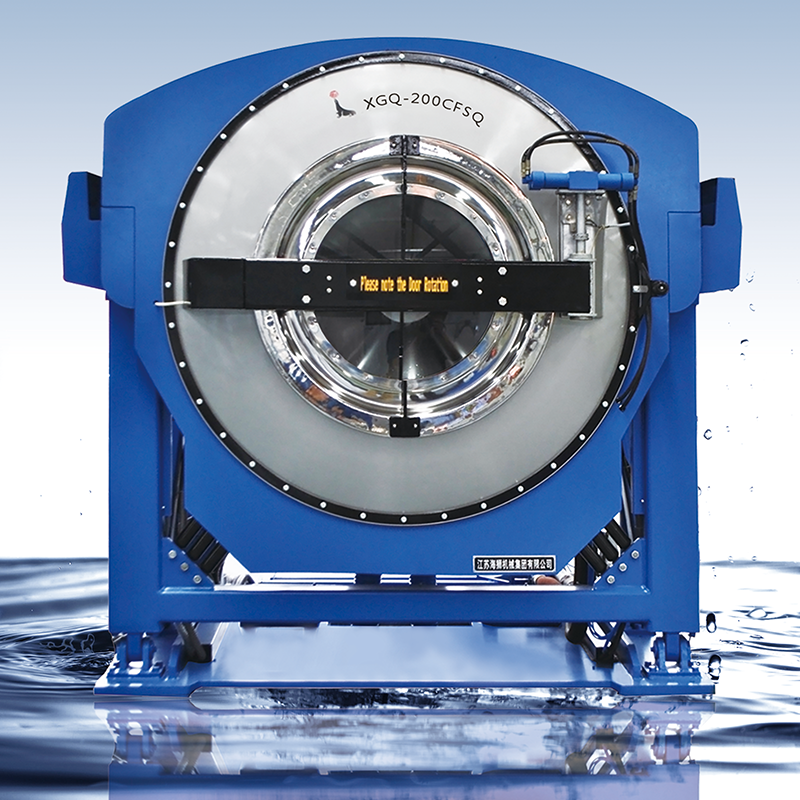 Hygienic Two-Zone Automatic Washer Extractor for Flexible CleanlinessThis isolated washer-extractor builds clean and non-clean zones within one machine, offering documented separation for facilities that need hygienic processing without a full barrier wall retrofit.View Product →
Frequently Asked Questions
Q1: Can a standard washer extractor be used in a hospital laundry?
A standard washer extractor can technically wash hospital linens, but it cannot provide the physical isolation required by infection control guidelines. If a standard machine is already installed, it should be used only with rigorous manual segregation protocols, and a barrier configuration is strongly recommended for any new healthcare laundry project.
Q2: What is the difference between a pass-through washer and a barrier washer?
They describe the same machine. The term pass-through washer emphasizes the two-door, wall-mounted design, while barrier washer extractor highlights the infection control function of that design. Both refer to a washer that separates the soiled side from the clean side.
Q3: Does a barrier washer extractor disinfect better than a standard washer?
The wash chemistry and thermal profile are not inherently different between the two designs. The barrier configuration adds a critical layer of protection by preventing recontamination after the wash cycle ends. This is precisely why healthcare laundries require physical isolation: the machine's structure, rather than operator vigilance alone, guarantees that the clean side stays clean.
Q4: How many barrier washer extractors does a hospital laundry need?
The number depends on daily linen volume, cycle time, and operating hours. A practical approach is to calculate the weekly kilogram volume and divide it by the machine capacity and the number of shifts. A professional laundry equipment supplier can perform a detailed load study to recommend the optimal number and capacity of barrier washers.
Q5: Are barrier washer extractors more expensive to operate?
Operating costs are generally comparable to standard washer extractors of the same capacity, because the wash cycle and energy consumption are similar. The higher investment is mainly in equipment purchase and wall installation. In return, you gain regulatory compliance, patient safety, and a defensible infection control protocol.
Conclusion
Barrier washer extractors and standard washer extractors serve different worlds. In hotels and commercial laundries, a single-door standard machine delivers efficient, economical results. In healthcare, physical isolation is a clinical requirement rather than a preference. The pass-through design of a barrier washer extractor is the only configuration that structurally prevents clean textiles from ever being exposed to the soiled side.
If you are planning a new hospital laundry or upgrading an existing one, begin by mapping your dirty-to-clean material flow, then select a barrier washer extractor that matches your capacity and hygienic zoning needs. For a deeper technical discussion of cross-contamination control, review our guide on how barrier washer extractors prevent cross-contamination in hospitals, or contact Sea-Lion for a tailored healthcare laundry solution.

- No. 2 Lehong Road, Leyu Town, Zhangjiagang, Suzhou City, Jiangsu Province, China
- +86-512-58602532
- [email protected]
Copyright @ Jiangsu Sea-Lion Machinery Co., Ltd. All rights reserved
Custom Laundry Equipment Suppliers