English
 Français
 Español







Vacuum Ironing Table vs. Standard Ironing Board: Moisture and Crease Permanence
Content
- 1 What Is a Vacuum Ironing Table?
- 2 Vacuum Ironing Table vs. Standard Ironing Board: Key Differences
- 3 Moisture Extraction: Why Suction Defines Finish Quality
- 4 Crease Permanence: How Vacuum Ironing Sets Sharper Folds
- 5 Where Vacuum Ironing Tables Earn Their Place
- 6 Choosing the Right Finishing Equipment for Your Workload
- 7 Frequently Asked Questions
In commercial laundry and garment care, the finishing stage decides whether a garment leaves the press with sharp, lasting creases or soft folds that relax within hours. The difference often comes down to one piece of equipment: the vacuum ironing table. Compared with a standard ironing board, a vacuum finishing table changes how moisture is removed from fabric and how creases are set. For laundry professionals evaluating their finishing workflow, understanding this comparison is essential to choosing the right tool for the job.
Industrial equipment manufacturers such as SEA-LION Machinery have built professional finishing tools around the vacuum principle for more than five decades. This article explains the technical differences between vacuum ironing tables and standard ironing boards, with special attention to moisture extraction and crease permanence.
What Is a Vacuum Ironing Table?
A vacuum ironing table is a professional finishing workstation that combines a perforated ironing surface with an integrated vacuum system. The table's motor draws air downward, pulling steam, moisture, and ambient heat through the fabric as the iron passes overhead. This active airflow does more than speed up drying; it changes how the fabric behaves under heat and pressure.
How Vacuum Suction Works in Finishing
The tabletop is drilled with small holes across its working surface. When the vacuum motor is switched on, negative pressure below the deck pulls the fabric firmly against the table. As the operator applies steam through a steam iron or steam gun, the airflow carries the moisture through the holes and away from the material, instead of letting it condense and re-wet the fabric.
Typical Components of a Professional Vacuum Table
- Perforated tabletop, usually fabricated from steel or cast iron
- Integrated vacuum motor with exhaust connection
- Steam supply interface for steam-assisted finishing
- Swingarm or fixed-deck configuration
- Height adjustment mechanism for operator comfort
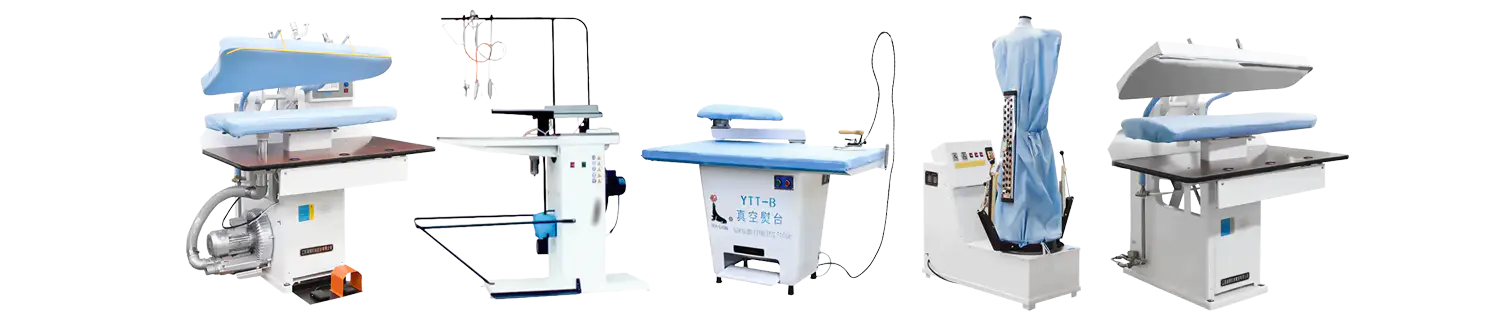
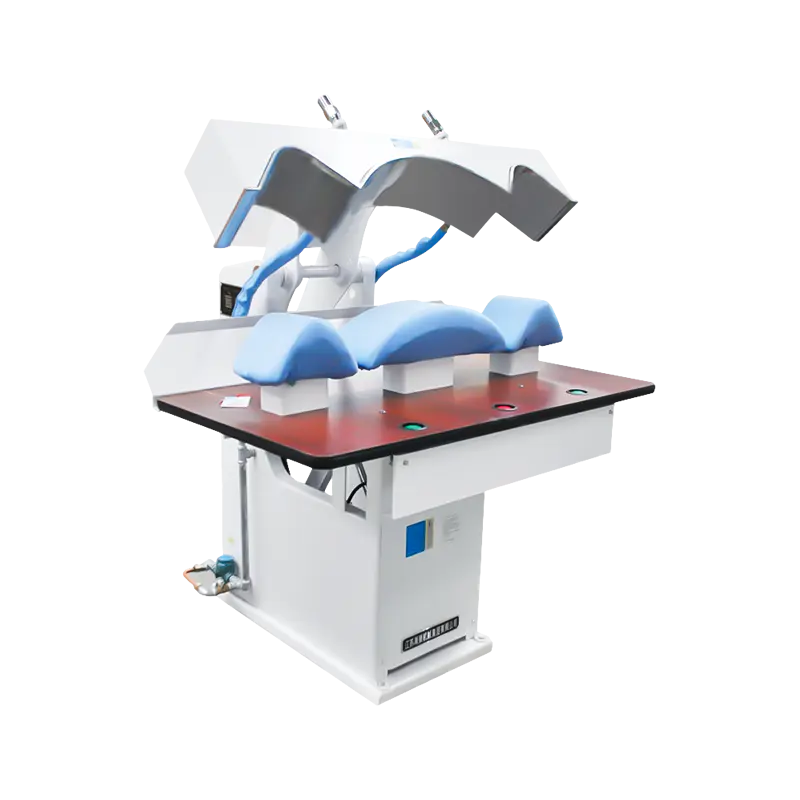
Many industrial models, such as the swingarm vacuum ironing table from SEA-LION Machinery, are engineered for heavy daily use in dry cleaning plants and commercial laundries.
 Swing-Arm Vacuum Ironing Table for Commercial Laundry UseThis heavy-duty table from SEA-LION Machinery combines vacuum suction with ironing to hold fabric taut, speeding drying and sharpening creases. It suits daily pressing in dry cleaning plants and commercial laundries.View Product →
Vacuum Ironing Table vs. Standard Ironing Board: Key Differences
Standard ironing boards rely on passive evaporation. The board's padded surface absorbs some moisture, but most of the steam escapes slowly into the surrounding air. A vacuum table, by contrast, actively extracts moisture from the fabric's fibres. That single difference cascades into every other performance factor: drying time, crease sharpness, fabric tautness, and operator productivity.
| Comparison Point | Vacuum Ironing Table | Standard Ironing Board |
|---|---|---|
| Moisture Extraction | Active suction removes steam and vapour within seconds | Passive evaporation; slower moisture release |
| Crease Definition | Suction holds fabric in place, producing sharp edges | Fabric can shift during ironing, softening creases |
| Fabric Cooling | Airflow cools fibres rapidly, locking in the folded shape | Natural cooling is considerably slower |
| Operator Efficiency | One or two passes usually complete the finish | Repeated passes may be needed to remove moisture |
| Adjustability | Height-adjustable and swingarm designs available | Fixed height with minimal adjustment |
| Typical Use | Commercial finishing, dry cleaning, institutional laundries | Household and occasional ironing |
Moisture Extraction: Why Suction Defines Finish Quality
Moisture is the central variable in pressing. When fibres are saturated with steam, they become pliable. As the fabric cools, the fibres re-bond in whatever position they hold. If moisture lingers after ironing, the fibres do not set properly, and creases relax within hours. Vacuum extraction solves this problem by removing moisture at the exact moment of pressing. The suction pulls steam through the fabric and off the table before it can re-condense.
A crease is permanent only when the fabric cools and sets in the folded position. Vacuum airflow accelerates both cooling and setting, turning a temporary fold into a fixed memory of the fibre.
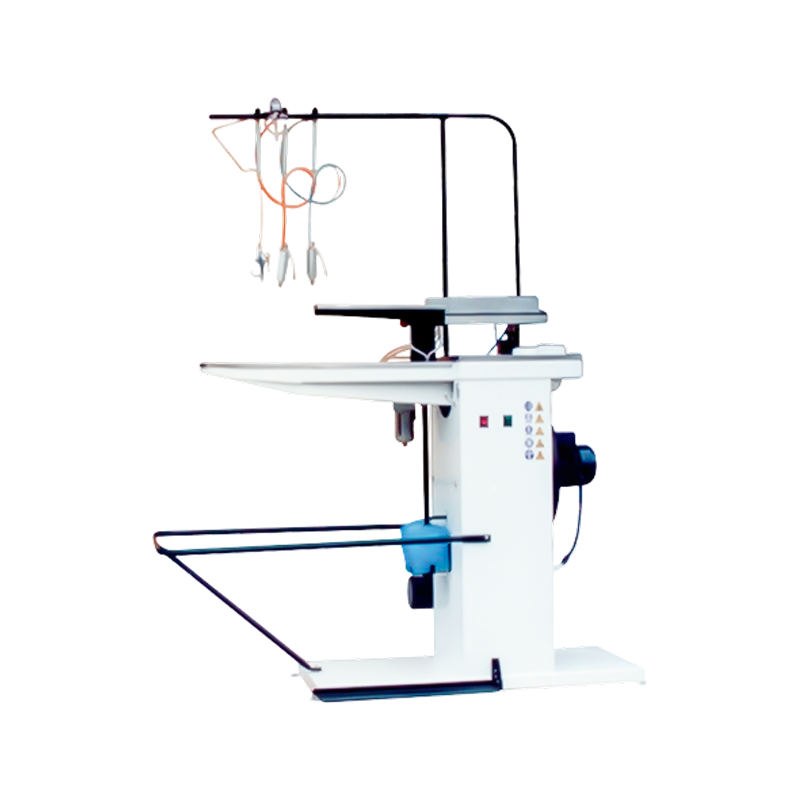
The same vacuum principle appears in other professional finishing tools. A vacuum self-dehumidifying spotting table, for instance, draws pre-treatment chemicals and dissolved soil out of the fabric instead of letting them spread, preventing stains from setting deeper into the weave. For garment-care operations that handle delicate or frequently stained items, this specialised equipment extends the benefit of vacuum moisture control beyond routine pressing.
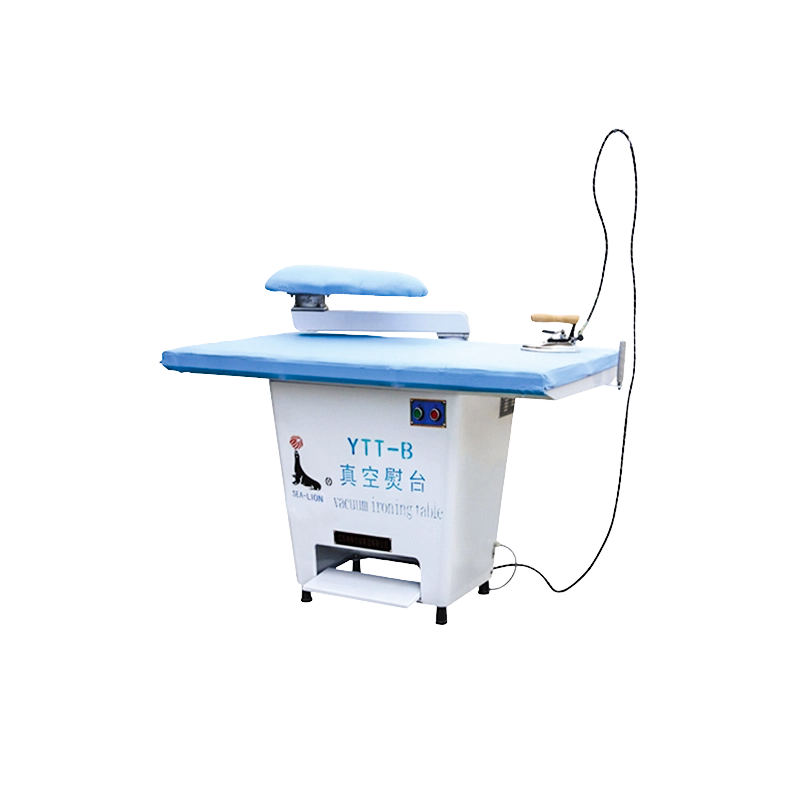 Vacuum Self-Dehumidifying Spotting Table for Stain RemovalDesigned for targeted stain treatment, this table uses vacuum dehumidification and hot-cold technology to lift oil, ink, blood, and coffee marks without harming fabric fibers, preventing stains from spreading deeper.View Product →
Crease Permanence: How Vacuum Ironing Sets Sharper Folds
Crease permanence is not the result of the iron alone. It comes from the combination of heat, pressure, and controlled moisture removal. When a garment is pressed on a vacuum table, the suction draws the fabric taut against the table surface. Wrinkles are pulled flat, and the fabric stays in precise alignment while the iron is applied.
The airflow also cools the fabric almost immediately after the iron passes. This rapid cooling locks the fibres in the pressed position, producing creases that endure through wear and storage until the next wash. On a standard ironing board, the fabric remains comparatively warm and moist after ironing, giving the fibres time to relax back toward their previous shape.
Which Garment Details Benefit Most from Vacuum Finishing?
- Trousers and slacks with defined centre creases
- Shirt collars and cuffs that require crisp edges
- Uniforms and dress apparel in hospitality and service industries
- Curtains and heavy drapes where sharp folds are requested
Where Vacuum Ironing Tables Earn Their Place
Vacuum ironing tables are standard equipment in commercial dry cleaning plants, garment finishing workshops, hotel laundry departments, and uniform care operations. They are equally valuable in healthcare and institutional laundries, where a consistent professional finish is part of the service standard.
These workstations sit naturally within a professional finishing system. Paired with steam presses, garment form finishers, and flatwork ironers, a vacuum table gives operators a flexible station for garments that cannot be processed on automated machinery. The synergy between manual finishing tables and automatic equipment is what allows a laundry line to handle non-standard garments efficiently while keeping throughput high.
Choosing the Right Finishing Equipment for Your Workload
Selecting between a vacuum ironing table and a standard ironing board starts with an honest assessment of your operation. Volume, fabric mix, available floor space, and the skill level of your operators all influence the decision.
Questions to Ask Before Investing
- How many garments do you finish per day?
- Which fabric types dominate your workload: suits, uniforms, linens, or delicates?
- Do you have space for a dedicated vacuum table with its exhaust connection?
- Will you pair the table with steam equipment or use it for dry finishing only?
- How much rework are you currently experiencing due to soft creases or moisture marks?
For businesses pressing more than a few dozen garments each day, the productivity gain of a vacuum table typically justifies the investment. Operators complete each garment in fewer passes, moisture is removed in seconds, and rework rates drop noticeably. Industry guidance on what defines a high-quality professional finishing system recommends matching the table size, motor power, and swingarm design to the largest garment categories you handle.
Frequently Asked Questions
Q1: Can a vacuum ironing table replace a standard ironing board for home use?
Technically, yes, but vacuum tables are industrial tools designed for daily commercial use. They require a vacuum motor, substantially more floor space, and a heavier supporting frame. For occasional home ironing, a standard board remains more practical. For professional operations, the vacuum table replaces the board entirely.
Q2: Does vacuum extraction really make creases last longer?
Yes. By pulling heat and moisture out of the fabric immediately after pressing, a vacuum table causes the fibres to cool and set in the pressed position. Creases hold until the next wash, rather than relaxing within hours when residual moisture remains in the fabric.
Q3: How does a vacuum ironing table differ from a steam press?
Both tools use heat and moisture control, but they fulfil different roles. A steam press applies uniform pressure across a flat surface, which suits large, flat areas such as shirt bodies. A vacuum ironing table gives the operator more control over curved and detailed garment areas, such as collars, lapels, and sleeves, where a press cannot follow the shape.
Q4: What maintenance does a vacuum ironing table require?
Routine maintenance includes cleaning the perforated deck to prevent lint build-up, checking the vacuum motor filter, and inspecting the exhaust duct for blockages. With regular cleaning, a professional vacuum table delivers many years of continuous service in a commercial laundry environment.
- No. 2 Lehong Road, Leyu Town, Zhangjiagang, Suzhou City, Jiangsu Province, China
- +86-512-58602532
- [email protected]
Copyright @ Jiangsu Sea-Lion Machinery Co., Ltd. All rights reserved
Custom Laundry Equipment Suppliers