English
 Français
 Español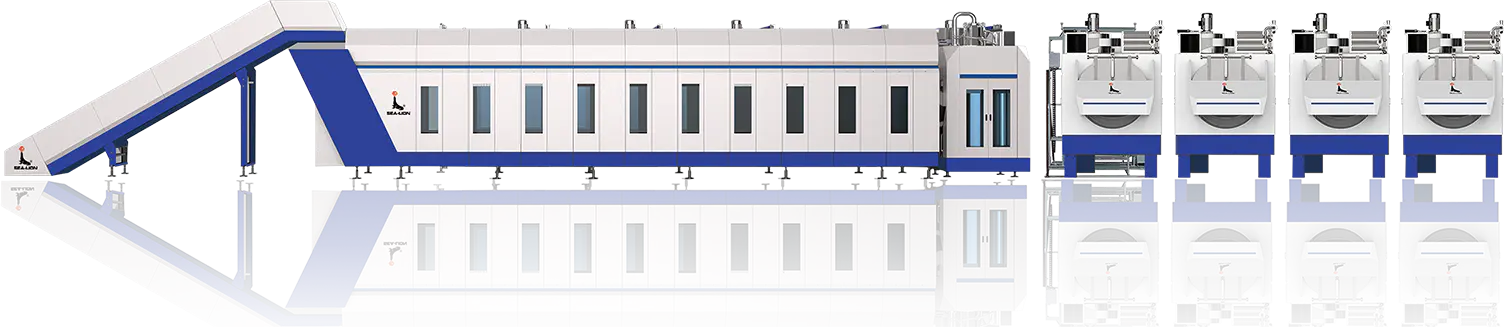







Laundry Presses: Extraction and Finishing Equipment for High-Volume Operations
Content
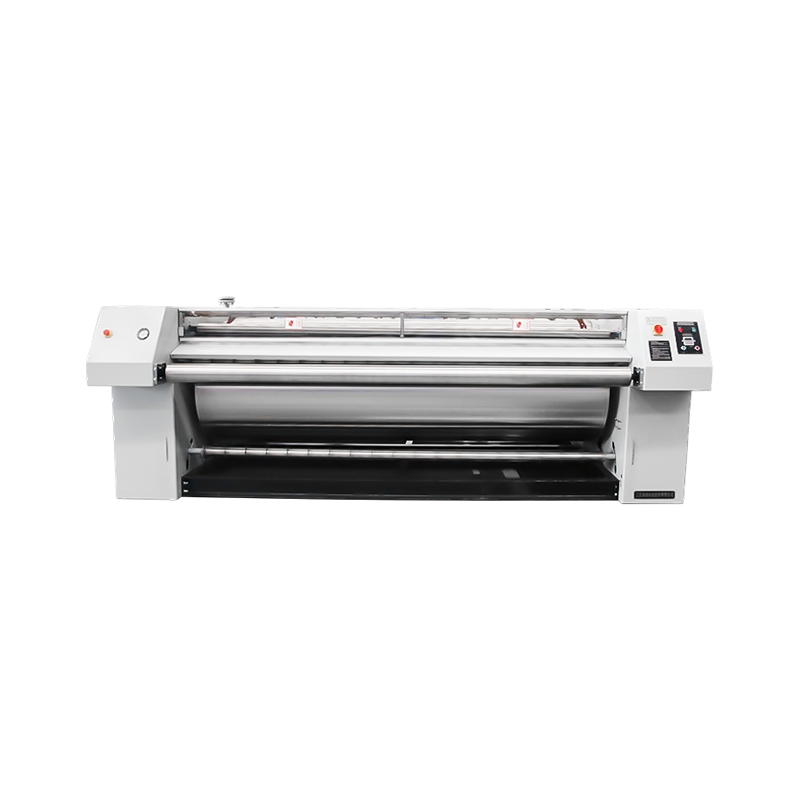
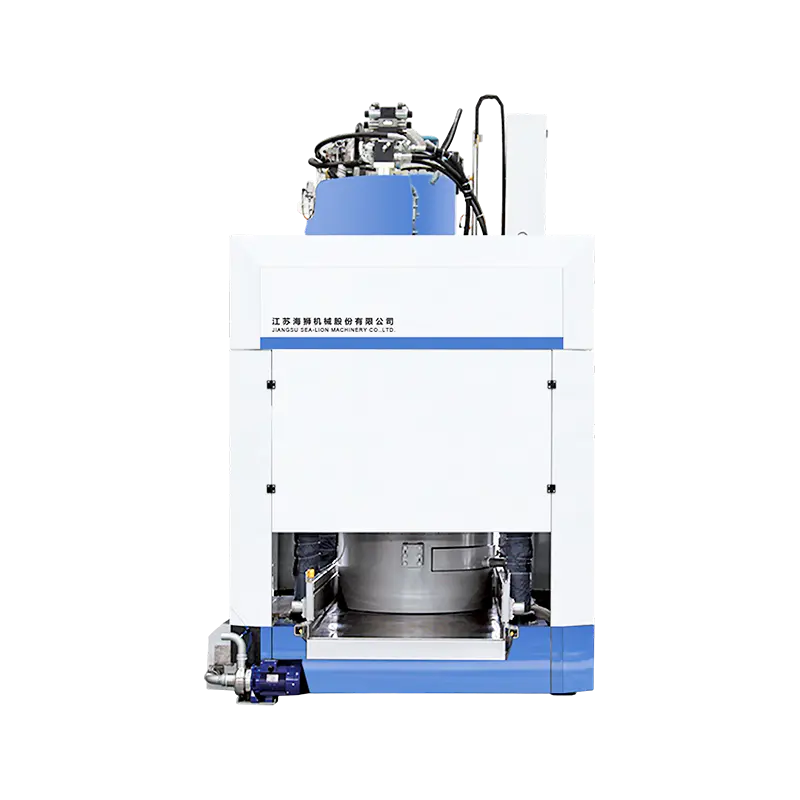
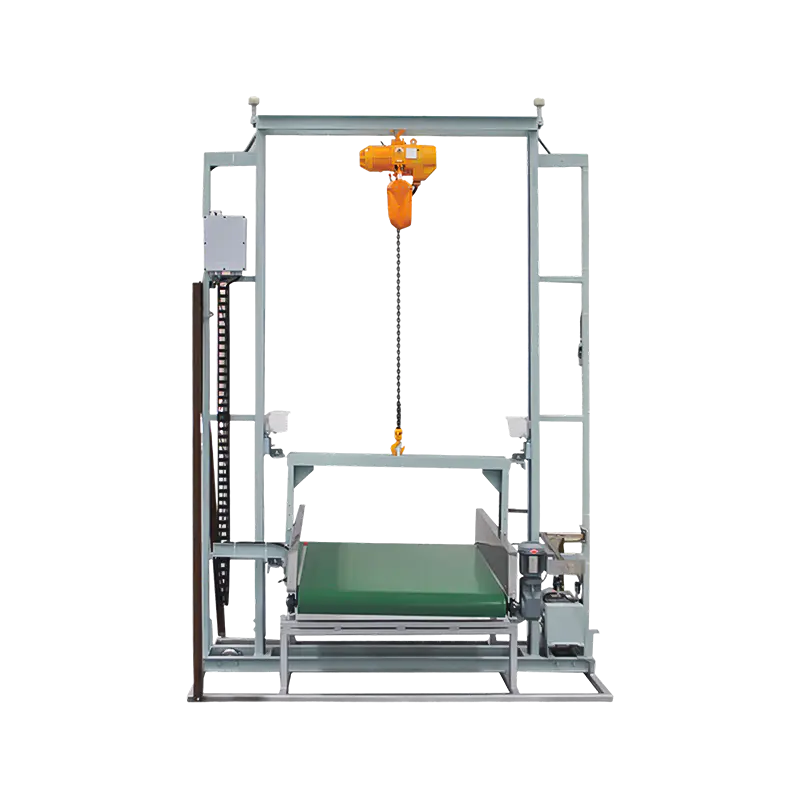
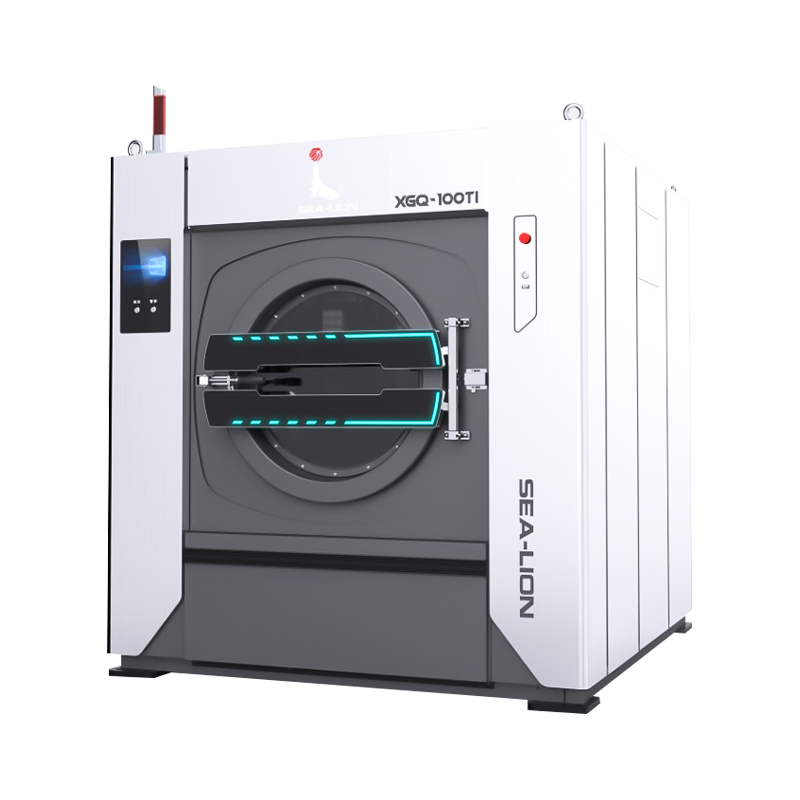
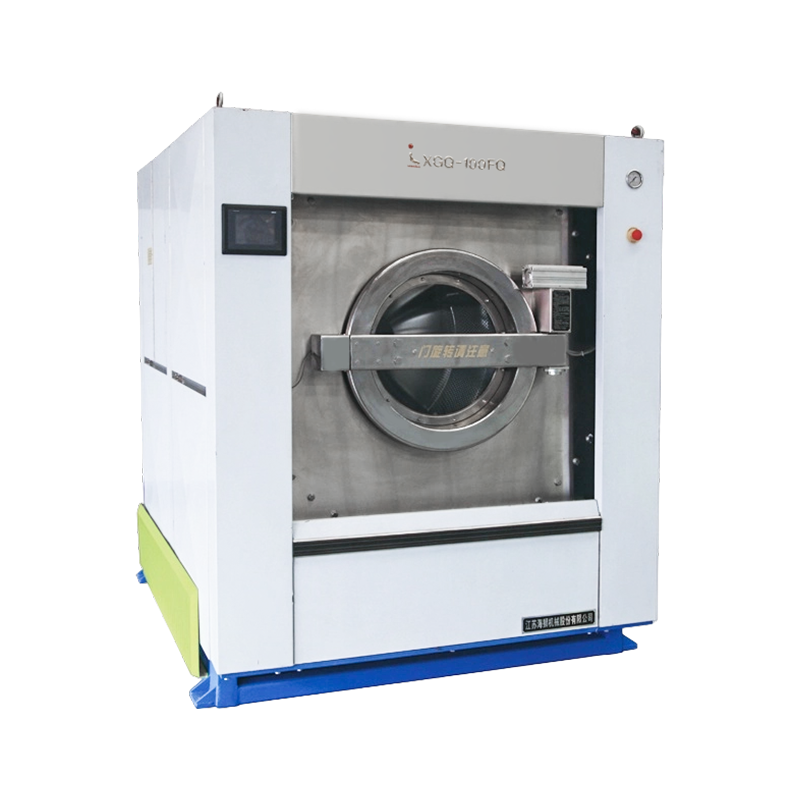
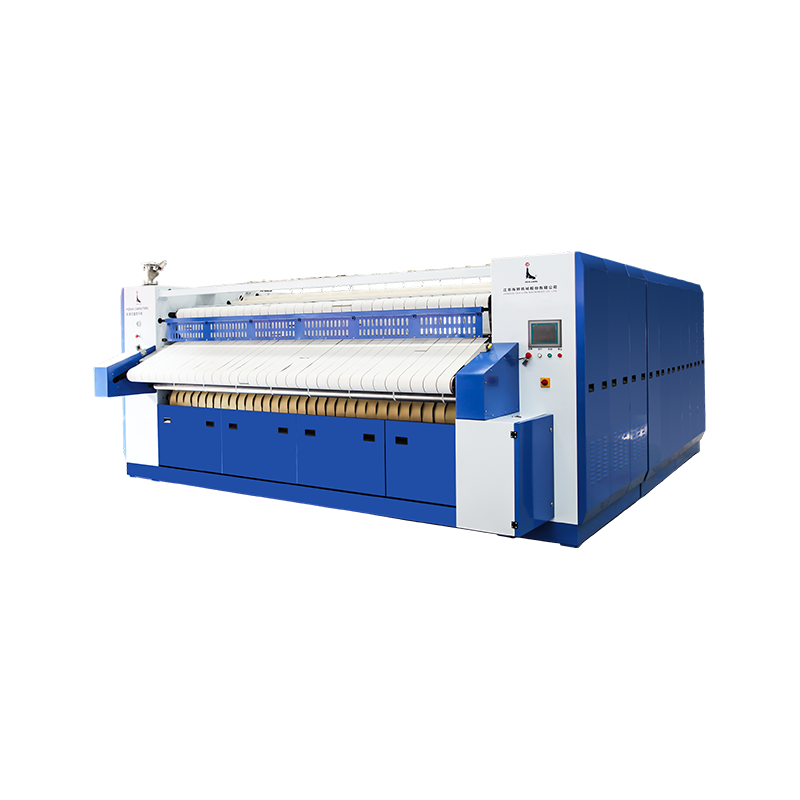
A laundry press is not one machine. It is either a hydraulic extraction press that squeezes water out of a washed tunnel batch in three minutes, or a garment press that gives a hotel uniform its final collar shape and pressed creases. Buying the wrong press type is a costly mistake that shows up every shift, either as dryer wait time or as rejects in the finishing room. Sea-Lion Machinery builds both categories. Knowing which one your laundry needs and how to size it is the first step to cutting drying time and finishing labor.
The monthly cost difference between the right and wrong press is measured in the thousands of dollars. It shows up as dryer time, rejected uniforms, and unnecessary staff hours.
What Laundry Presses Do in a Commercial Laundry
An industrial laundry press is a machine that applies pressure to a textile load either to remove water or to set a final shape. The two press families serve completely different stages of the wash line.
Extraction presses operate on washed linen before drying. They compress a full batch of fabric into a dense cake and force water out through perforated plates or basket walls. The moisture content drops from roughly 70-85 percent after gravity drainage to roughly 40-50 percent after a hydraulic cycle. This shortens dryer run time and cuts thermal energy consumption.
Garment presses operate after drying. They use steam, heat, and vacuum to reshape the garment, set creases, flatten collars and cuffs, and add the body that makes a clean shirt look ready to wear. A typical press station processes one piece in 15 to 60 seconds, depending on the machine type.
An extraction press saves money through the dryer. A garment press saves money through the people.
Key functions by category:
- Hydraulic extraction: dewatering, volume reduction, dryer feed optimization
- Garment press: crease setting, collar and cuff shaping, uniform finishing
- Utility press: small-item finishing for napkins, towels, and children's garments
Hydraulic Extraction Presses: The First Squeeze
A hydraulic extraction press removes more water from a washed batch in three minutes than gravity can do in three hours.
The specification that matters is pressing force. Sea-Lion's hydraulic laundry extraction press is rated in tons, and most commercial units operating on continuous tunnel washer system lines apply roughly 50 to 80 tons of force depending on the basket diameter and the fabric volume. The hydraulic cylinder pushes the load against the press plates, and water escapes through perforations while the fabric compresses into a dense cake.
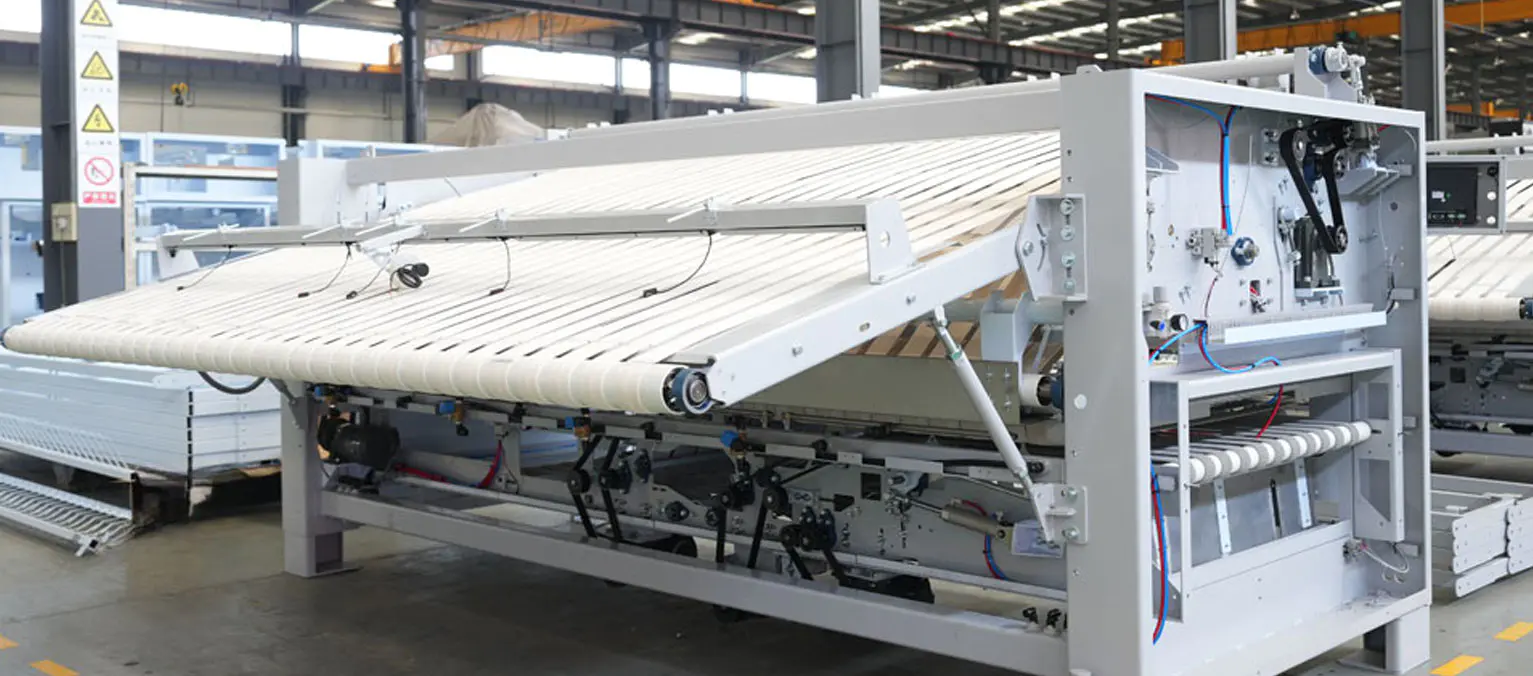
 Hydraulic Extraction Press for Continuous Tunnel Washer LinesThis hydraulic press applies 50 to 80 tons of force to squeeze water from fabric, forming a dense cake. It fits seamlessly between tunnel washers and dryers, boosting throughput in commercial laundries.View Product →
Positioned between the main tunnel washer and the pass-through dryer, the extraction press is usually linked to an automatic shuttle. This creates a continuous flow: wash, press, dry. The measurable gains are consistent across commercial laundries:
- Drying time drops 20 to 30 percent because the dryer receives a load with less residual moisture
- Thermal energy demand falls by two to three kilowatt-hours per ton of linen in many facilities
- The wet-holding area between washer and dryer is eliminated or significantly reduced
The trade-off is cycle time. An extraction press takes 2 to 4 minutes per batch, and this must be matched to washer output. An undersized press creates a backlog; an oversized press wastes capital.
Garment Press Machines: Finishing Beyond the Dryer
A garment press is the machine that turns a washed and dried article into a finished product that is ready for use.
Different machines handle different garment types. The right combination determines how many operators you need and whether you can offer a consistent finish across thousands of pieces per day.
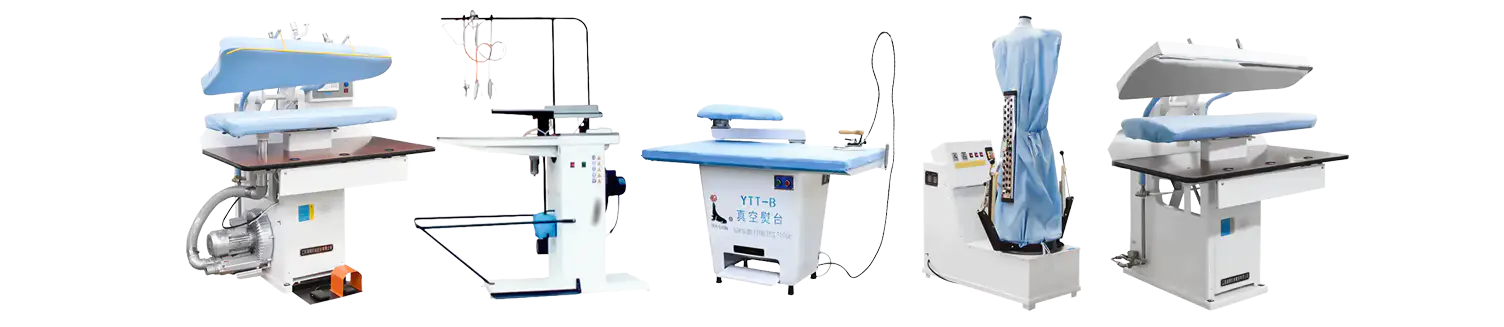
- Fully automatic wet pressing machines apply live steam to a damp garment and set creases before drying. They are used for jackets, trousers, and dress shirts in hotel and institutional laundries.
- Mushroom utility presses use a mushroom-shaped head to finish small items. They are common in nursing homes and hospitals for napkins, towels, and baby garments.
- Collar and sleeve presses focus on the most visible detail of a formal shirt, keeping the collar flat and crisp as a key inspection point.
- Form finishers use an inflatable form and steam to shape the entire garment, reducing the need for manual ironing.
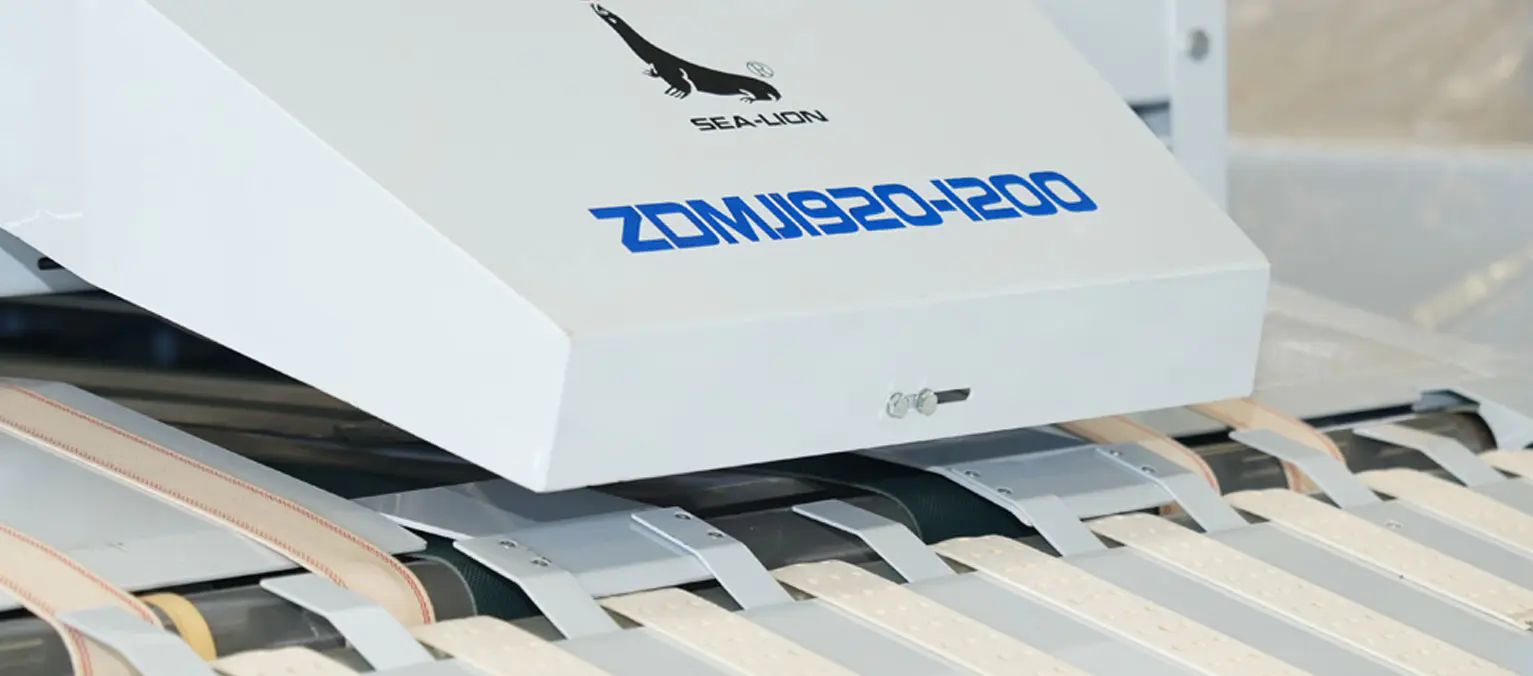
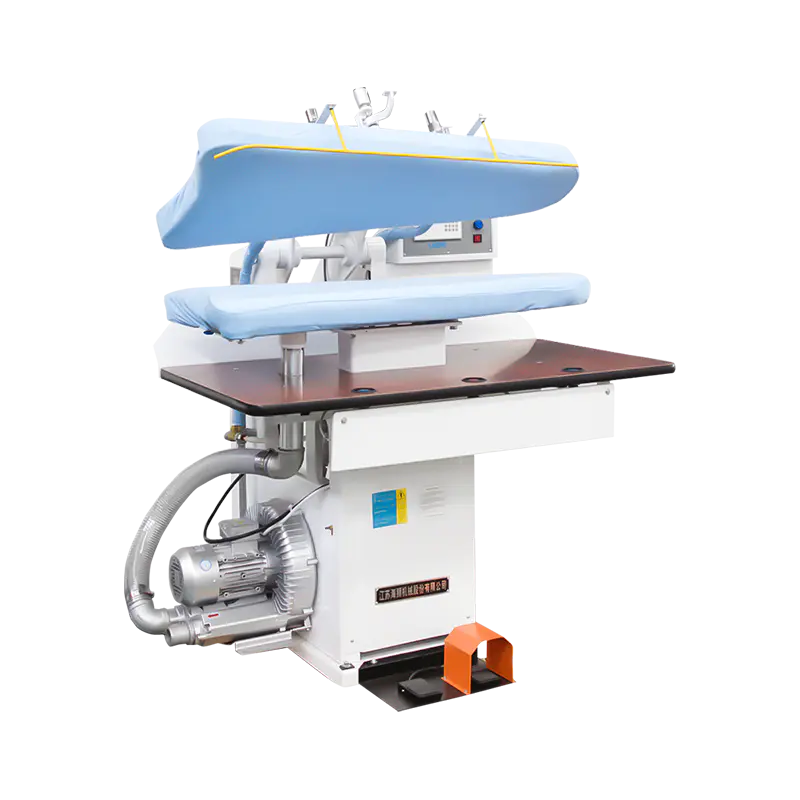 Automatic Pneumatic Wet Pressing Machine for Fabric FinishingThis automatic pneumatic press handles wet fabrics, non-wovens, and leather. Integrated into a finishing system with folders and ironers, it can raise output from 10–15 to 30–60 pieces per operator-hour, cutting labor needs.View Product →
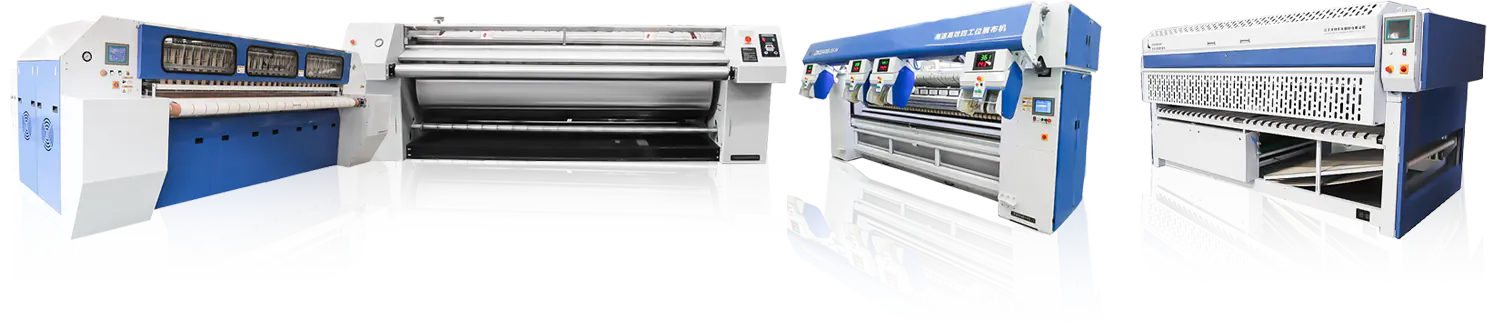
Sea-Lion fits these machines into a professional finishing system that aligns with high-speed sheet folders, flatwork ironers, and towel folders. The key operational benefit is labor. A manual ironing station processes roughly 10 to 15 garments per operator-hour, while a press-assisted station processes 30 to 60 pieces per operator-hour. On a shift handling 1,500 garments, this can cut the finishing team from eight operators to three or four.
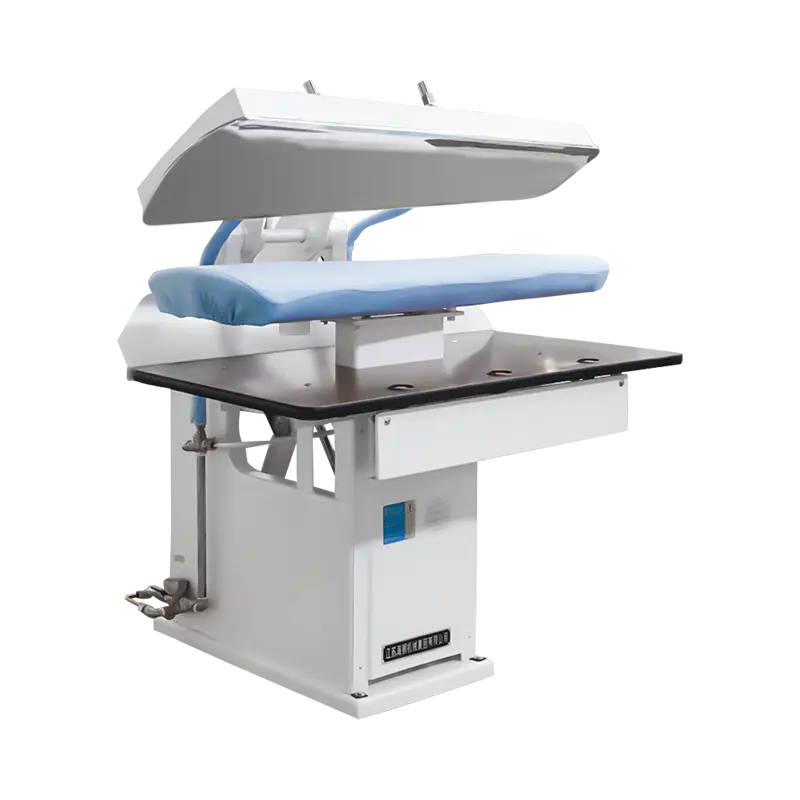 Commercial Mushroom Utility Press for Multifunctional IroningThis pneumatic, fully automatic hot-head press shapes hems, collars, napkins, and small items from cotton, wool, or synthetics. It suits hotels, restaurants, and laundries, offering efficient, stable pressing with low heat consumption.View Product →
Laundry Presses: Choosing Between Extraction and Finishing
Choose the press based on where water removal is needed and whether your output requires shaped garments, not on which machine sounds more versatile.
| Parameter | Hydraulic Extraction Press | Garment Finishing Press |
|---|---|---|
| Primary function | Remove water from washed linen | Shape and finish garments |
| Position in line | Between washer and dryer | After dryer, in finishing room |
| Typical output | Residual moisture 40-55 percent | Finished, ready-to-issue garments |
| Power source | Hydraulic | Steam, vacuum, compressed air |
| Operators needed | 0-1 with automation | 1-3 per station |
| Cycle time | 2-4 min per batch | 15-60 sec per garment |
In practice, the extraction press protects the dryer budget, while the garment press protects the labor budget. Most commercial laundries need both.
Sizing, Spec, and Operational Impact
Press sizing is a throughput calculation, not simply a force calculation. Match the press cycle time to the washer and dryer schedule.
Installation case: A 900-room hotel laundry that added hydraulic extraction to its tunnel washer reduced dryer running time from 18 hours to 13 hours per day, cutting natural gas consumption by roughly 22 to 25 percent.
Sea-Lion documented this installation on a 12-ton-per-day line. Before the press, gravity-drained batches entered the dryers with about 85 percent moisture. After the press, residual moisture fell to about 50 percent, and the same dryers handled the entire daily load in 13 hours.
FAQ: Common Questions About Laundry Presses
What is the difference between a laundry press and an ironer?
A laundry press uses pressure to remove water or shape garments. An ironer uses heated rollers to dry and smooth flat linen such as sheets and tablecloths. The two are complementary, not interchangeable.
Can a hydraulic extraction press handle all fabric types?
Within limits. Cotton, linen, polyester blends, and heavy terry towels tolerate higher pressure. Delicate fabrics such as silk, fine wool, or dress shirts need lower pressure and a shorter cycle. Most modern presses allow per-batch pressure adjustment.
How much floor space does a laundry press need?
A hydraulic extraction press for a tunnel line typically requires about 2 to 3 square meters including service space. A garment press station, including vacuum and steam connections, usually fits within 1.5 to 2 square meters per operator.
What maintenance does a laundry press require?
The routine work covers cylinder cleaning, hydraulic oil level and seal checks, and steam and vacuum system inspection. A quarterly seal replacement routine keeps most presses running 10 to 15 years in a two-shift operation.
- No. 2 Lehong Road, Leyu Town, Zhangjiagang, Suzhou City, Jiangsu Province, China
- +86-512-58602532
- [email protected]
Copyright @ Jiangsu Sea-Lion Machinery Co., Ltd. All rights reserved
Custom Laundry Equipment Suppliers